
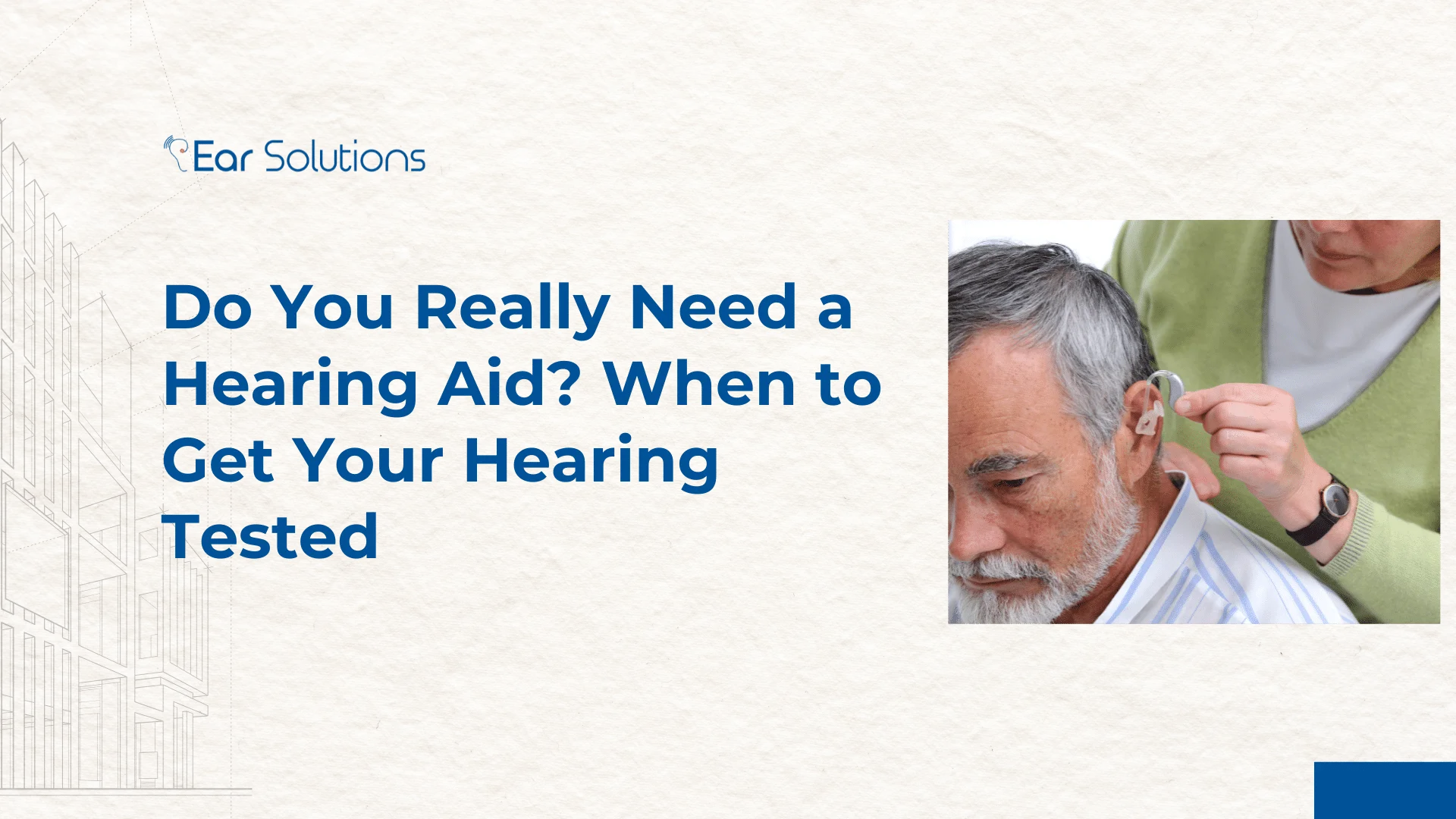
Do You Really Need a Hearing Aid? When to Get Your Hearing Tested
Hearing is vital for the ability to communicate, ensure safety, and maintain overall health. Unfortunately, gradual loss of hearing may stay unobserved for years. Many patients tend to think that the temporary difficulties in hearing or the ones arising with age need no help, hence delaying a visit to the doctor. It is crucial for an early evaluation in the clinical perspective for an accurate diagnosis and management.
This guide presents when a hearing test should be conducted and how to know whether a hearing aid may assist your hearing further.
Table of Contents
Understanding Hearing Loss
Hearing impairment can occur at any age, onset being primarily responsible for aging, noise exposure, infections, medical conditions, or other factors. One or both ears may be involved, and the condition may be temporary or permanent.
Possibly common types of hearing loss are:
- Conductive hearing loss, often due to wax, fluid, or infection in the ear
- Sensorineural hearing loss-damage to the inner ear or auditory nerve, as the term explains
- Mixed hearing loss, which is the combination of both forms
Hearing impairment can occur at any age, onset being primarily responsible for aging, noise exposure, infections, medical conditions, or other factors. One or both ears may be involved, and the condition may be temporary or permanent.
Signs That Indicate You Should Get a Hearing Test
Under the following conditions, a professional hearing evaluation should be considered by persons suffering from:
- Difficulty comprehending speech, especially within a noisy environment.
- Often requesting others to repeat themselves.
- Selective amplifying of the televisions or mobile devices.
- Muffled, unclear hearing.
- Sound ringing or buzzing in the ears (tinnitus).
- Fatigue or frustration conversing.
- Withdrawal from social activities.
- These symptoms can indicate potential early or progressive hearing loss. Don't neglect them
When to Schedule a Hearing Evaluation
It is suggested that you have an audiometry examination if you:
- Are 50 years and above, even if no perceptible symptoms are present
- Have encountered exposure to loud noise in a working environment or through recreation
- Have a familial history of hearing loss
- Live under conditions that involve diabetes, hypertension, or heart disease
- Have repeated ear infections, vertigo, or ear-induced discomfort
- Have been told by family members that they think your hearing has changed
- Early testing allows for timely medical or rehabilitative intervention.
Does a Hearing Test Mean You Will Need a Hearing Aid?
Not always. A hearing test is a diagnostic procedure intended for measuring hearing sensitivity and speech understanding. Findings may lead to recommendations that include:
- Medical treatment for reversible causes
- Periodic monitoring of hearing levels
- Preventive hearing care guidance
- Hearing devices when hearing loss is permanent and is interfering in daily functioning
Each intervention plan is tailored to accommodate the clinical needs and lifestyle of the patient.
When Are Hearing Aids Recommended?
Considering hearing aids may involve:
- When impaired hearing limits the quality of communication
- When speech has become too unclear
- When difficulties in hearing interfere with work or social activities
- When hearing impairment poses personal safety risks
- When there is a possibility of medical treatment failing in improving the hearing capacity
- Modern hearing aids are small and comfortable and are manufactured to make
- Modern hearing aids are small and comfortable and are manufactured to make speech clearer while filtering out background noise.
Why Early Diagnosis Matters
Hearing care delayed leads to difficulties in communication and social isolation; increase in listening effort and mental fatigue; reduction of quality of life and potential long-term impacts on cognition and emotions. Early intervention enables patients to remain active communicators in their own lives.
Schedule a Hearing Test at Our Clinic
If you suspect a hearing problem, or are considering a hearing aid, the first step for you could be a professional hearing evaluation. Comprehensive hearing examinations are conducted at our clinic by trained professionals using advanced diagnostic equipment.
The earlier the evaluation is done, the better the result. Call our clinic today to schedule your test – an important step to fuller hearing health.
