
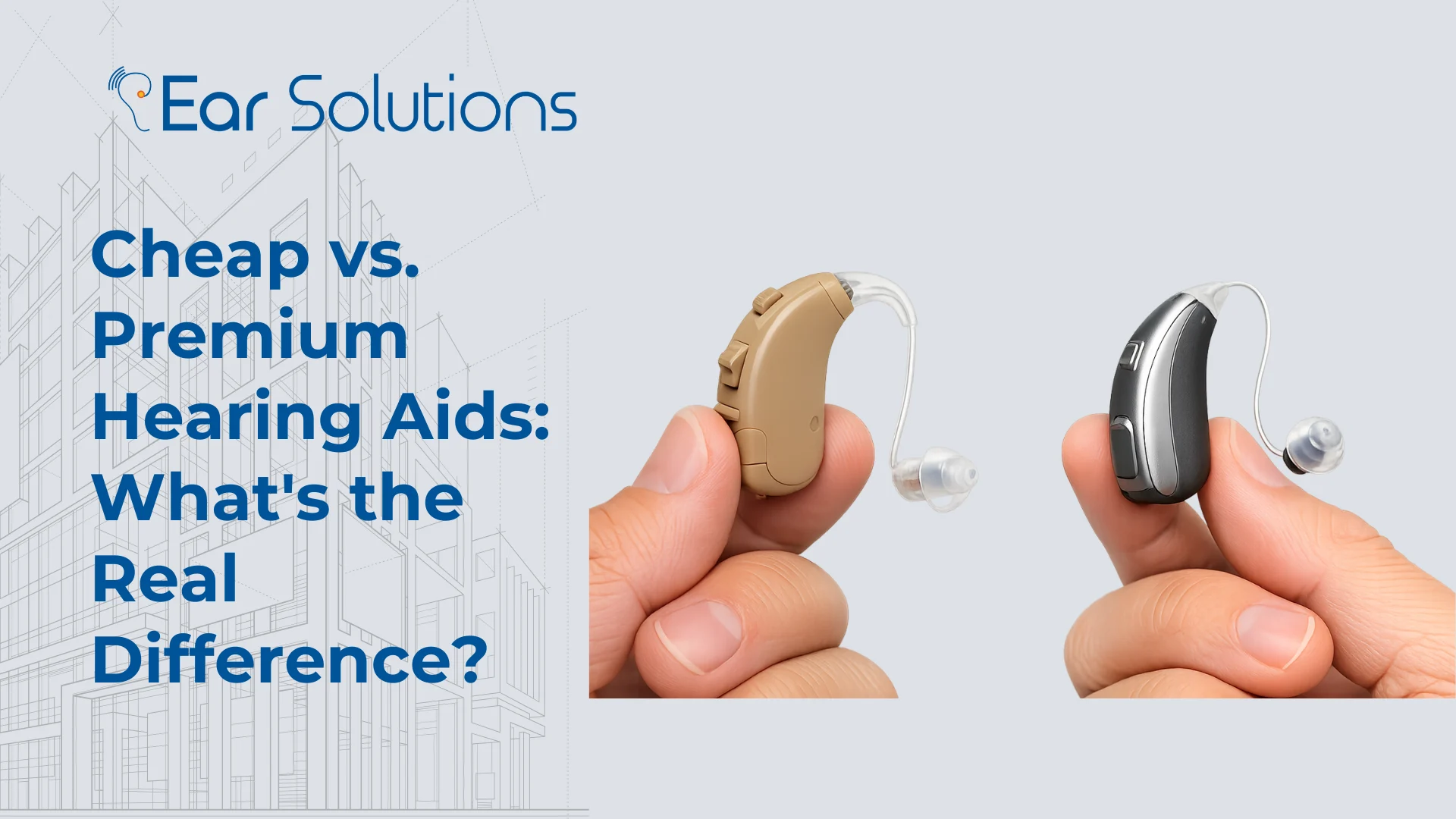
Cheap vs. Premium Hearing Aids: What’s the Real Difference?
Let us be honest about something most hearing clinics are too polite to say out loud. Not all hearing aids are created equal, and the price gap between cheap vs. premium hearing aid options is not just about branding or markup. There are real, meaningful differences in how these devices perform in the moments that matter most to you.
If you have been searching for the best hearing aids and found yourself wondering whether the cheaper option is good enough, this blog is written for you. No sales pitch. No jargon walls. Just a clear, honest look at what you are actually getting for your money.
Summary
The short version is this. Cheap hearing aids can help with basic amplification in quiet settings. Premium hearing aids are built to help you hear better across all the messy, unpredictable situations that make up real life. If you only ever sit in a quiet room and watch television, a budget device might be fine. But if you live an active life and want to actually follow conversations at dinner, at work, or at family gatherings, the difference between cheap and premium is enormous.
Key Takeaways
- Cheap hearing aids amplify sound but struggle to separate speech from background noise in complex environments.
- Premium hearing aids use advanced processing chips to deliver cleaner, more natural sound in the situations where you need help the most.
- The price gap between cheap hearing aids and premium hearing aids in the USA is significant, but so is the gap in real-world performance.
- A trial period at a trusted hearing aid clinic is always worth asking for before you commit to any device.
What Cheap Hearing Aids Actually Give You
Cheap hearing devices, which typically fall in the range of $2,000 and $3,500 per pair, are essentially basic amplifiers. They make sounds louder. That is more or less where their job ends.
In a quiet room, this can feel surprisingly effective. You hear the television better. You catch what your family member says across the table. In that controlled setting, a budget device does not feel like a compromise. The problem shows up the moment you step outside that quiet room.
Cheap hearing aids typically use older or simpler processing technology. They cannot tell the difference between the voice you want to hear and the noise you want to ignore. So when you walk into a market, a restaurant, or even a slightly noisy office, everything gets louder together. The person talking to you. The fan in the corner. The conversation is happening three tables away. It all comes at you at the same volume, which is exhausting and often worse than wearing nothing at all.
Most budget devices also lack Bluetooth connectivity, rechargeable batteries, and any kind of app-based fine-tuning. What you buy on day one is what you are stuck with for the life of the device.
What Premium Hearing Aids Actually Give You
Premium hearing aids, which in the USA generally range from $2,000 and $3,500 per pair depending on the brand, tier, and hearing aid clinic, are built on an entirely different foundation.
They use sophisticated processing chips that analyze your sound environment multiple times every second. They can identify where sounds are coming from, separate speech from noise, reduce wind interference, soften sudden, sharp sounds, and adjust automatically as you move between environments. You do not have to press a button every time you walk from a quiet hallway into a noisy canteen. The device figures it out on its own.
Premium hearing aids also come with features that directly improve your quality of life beyond just hearing. Rechargeable batteries mean no more fiddling with tiny cells every few days. Bluetooth streaming means phone calls, music, and video calls come directly into your ears with no extra effort. Remote fine-tuning means your audiologist can adjust your settings without you having to come into the clinic in person.
Brands like Oticon, Signia, Phonak, and Widex have each invested decades of research into making speech sound natural, not just audible. That distinction matters more than most people realize until they experience it.
Cheap vs Premium Hearing Aid Price Comparison in the USA
Cheap vs. Premium Hearing Aid Price Comparison typically costs between $2,000 and $3,500 per pair. These are suitable for mild hearing loss in quiet environments, and they require no professional fitting or follow-up in most cases.
Mid-range hearing aids fall between $3,000 and $4,500 per pair. These offer better noise management than budget options and some connectivity features, but they still cannot match the automatic adaptability of premium devices.
Premium hearing machines generally start around $4,800 per device and can reach $6,800 or more for top-tier models with full feature sets. A pair of premium devices with accessories and follow-up sessions from a reputable hearing aid clinic will typically cost $9,800 or more per pair.
To give you a clearer picture, here is roughly what you can expect to spend.
| Feature | Cheap Hearing Aids | Premium Hearing Aids |
|---|---|---|
|
USA Price Range
|
$2,000 – $3,500 per pair
|
$4,800 – $6,800+ per device
|
|
Sound Quality
|
Basic amplification
|
Clear, natural sound
|
|
Bluetooth
|
Mostly No
|
Yes |
|
Rechargeable
|
Limited
|
Yes
|
|
Best For
|
Quiet environments
|
Busy social lifestyles
|
|
User Experience
|
Louder sound
|
Better conversations |
|
Popular Brands
|
Basic amplifiers
|
Oticon, Signia, Phonak
|
The price difference is real. But so is the difference in what your day actually feels like when you are wearing the device.
Which One Is Right for You?
The honest answer depends on your lifestyle and the specific situations where your hearing loss causes you the most difficulty.
If your hearing loss is mild, if you mostly spend time at home, and if you are on a tight budget, a mid-range or even a basic device might give you enough improvement to feel meaningful.
If you work, socialize regularly, attend meetings, or simply refuse to withdraw from the conversations that make life rich, premium hearing aids are not a luxury. They are the difference between participating and pretending to participate.
The single best thing you can do before spending any money is visit a proper hearing aid clinic, get a full audiological evaluation, describe your daily life in honest detail, and ask to trial the device they recommend. A good audiologist will never push you toward a price point that does not suit your actual needs.
Conclusion
Cheap hearing aids have their place. They are not fraudulent products. But they are built for a narrower, quieter version of life than most people actually live. Cheap vs. Premium Hearing Aids: Both are better for comparison and knowing more; you should consult an expert.
Premium hearing aids cost more because they do more, not because of the box they come in. The processing technology, the automatic adaptability, the natural sound quality, and the ongoing professional support you receive from a trusted hearing aid clinic all add up to something that changes how you experience your world, not just how loud it sounds.
Talk to an audiologist at Ear Solutions, describe your real life without filtering it, and ask every question you have. The right hearing aid is the one that fits your ears, your lifestyle, and your future. Not just your budget.
FAQ
Are cheap hearing aids worth buying?
For very mild hearing loss in quiet environments, basic devices can provide some benefit. But for anyone dealing with background noise in daily life, the limitations of cheap hearing aids become a real problem quickly.
What is the price difference between cheap and premium hearing aids in the USA?
Cheap hearing aids can start as low as $2,000 per device. Premium hearing aids typically range from INR $2,000 to $3,500 per pair. The gap reflects genuine differences in processing power, features, and sound quality.
Can I trial a premium hearing aid before buying?
Yes. Most reputable hearing aid clinics offer 30 to 45-day trial periods. Always ask for one before purchasing a premium device.
Do premium hearing aids connect to smartphones?
Yes. Most premium hearing aids from leading brands support Bluetooth streaming, which allows you to take calls, listen to music, and control settings directly from your phone.
How do I know which type of hearing aid is right for me?
Visit a qualified audiologist, get a proper hearing test, and describe your daily listening challenges honestly. A good hearing aid clinic will match you to a device based on your real life, not just your audiogram.
-
Tags :
- affordable hearing aids
- best hearing aid brands 2026
- best hearing aids in the USA
- Buying Hearing Aids
- cheap hearing aids
- Cheap vs Premium Hearing Aid Price Comparison
- Cheap vs. Premium Hearing Aids
- digital hearing aids
- free hearing test online
- hearing aid
- Hearing aid brand
- Hearing Aid Brands Comparison
- hearing aid prices
- hearing aid shop
- hearing aid shop near me
- hearing aid store
- Hearing aid store near me
- hearing aids store
- hearing loss test
- Invisible Hearing Aids
- premium hearing aids
- small rechargeable hearing aids
- top-rated hearing aids 2026
- Traditional Hearing Aids
