
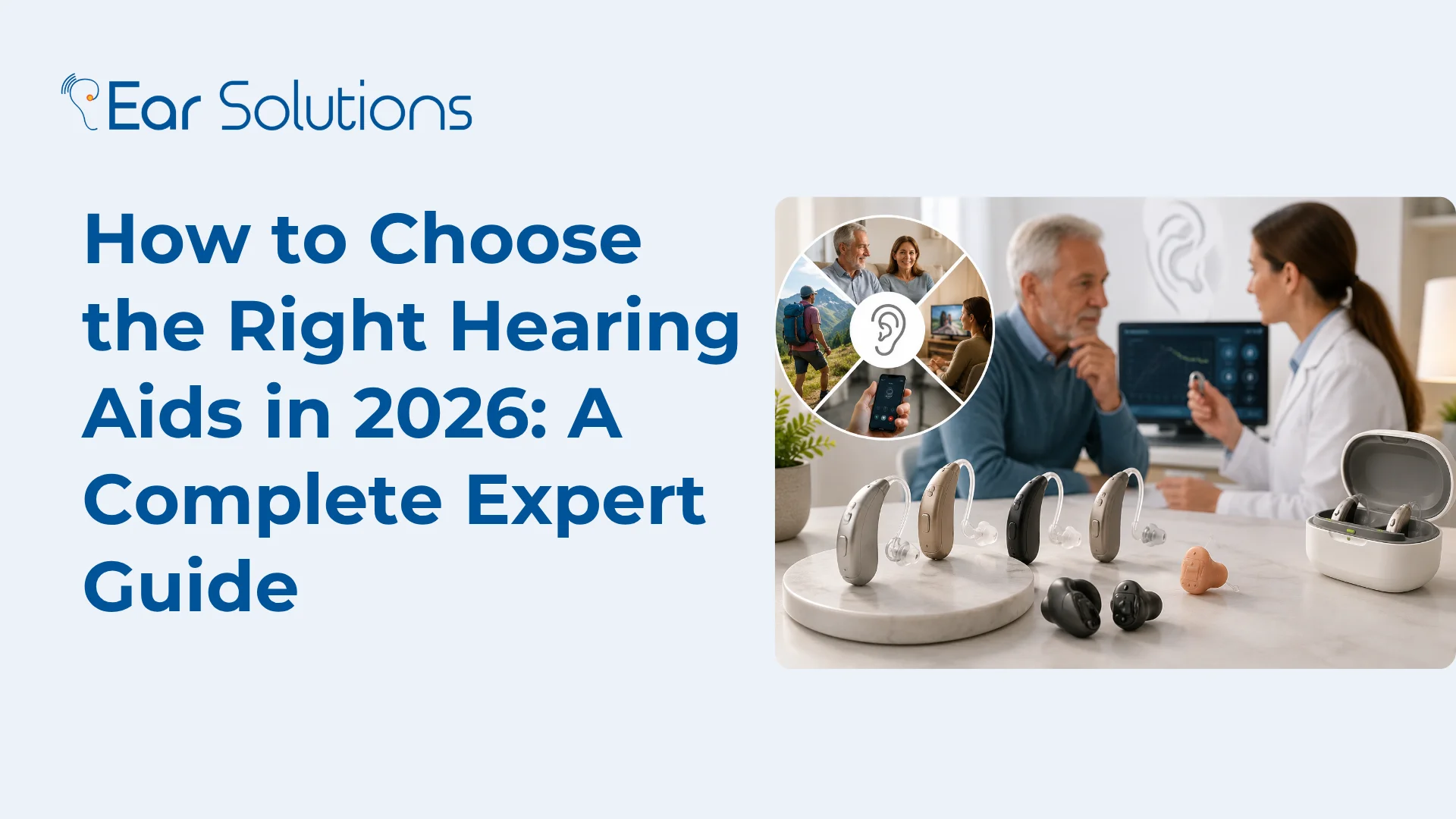
How to Choose the Right Hearing Aids in 2026: A Complete Expert Guide
Choosing a hearing aid feels simple until you actually start looking. There are dozens of hearing aid styles, hundreds of models, and a wide range of prices and no shortage of conflicting opinions about which ones are the best. For most people in the USA, the process quickly becomes confusing, and that confusion often leads to either buying the wrong device or putting the decision off altogether.
The right hearing aid is not the most expensive one or the most popular one. It is the one that fits your specific hearing loss, your lifestyle, and your budget and comes with professional support to back it up.
Summary
This guide covers the main hearing aid types available today, how much hearing aids cost in the USA, what features actually matter, and how to find the right provider.
Key Takeaways
- There are six main hearing aid types, each suited to different hearing needs and lifestyles.
- Hearing aid costs in the USA typically range from $2,000 to $9,800 per pair.
- A professional hearing evaluation is the essential first step before buying any device.
- Top brands like Phonak, Starkey, Widex, Oticon, and ReSound each offer different strengths.
- Trial periods, proper fitting, and follow-up care matter just as much as the device itself.
How Do You Know If You Actually Need a Hearing Aid?
There are many signs that show that you need to take up a hearing test and buy hearing aids under the guidance of a professional audiologist.
| Sign | Daily Impact |
|---|---|
|
Asking people to repeat themselves
|
Conversations become tiring and frustrating |
|
Turning the TV louder than others prefer
|
Creates tension at home
|
|
Struggling to follow dialogue in noisy places
|
Restaurants and social events feel exhausting
|
|
Missing phone calls, alarms, or doorbells
|
Important sounds go unnoticed
|
|
Feeling mentally drained after conversations
|
Listening requires significant extra effort
|
|
Avoiding group conversations
|
Isolation sets in gradually
|
If several of these feel familiar, scheduling a professional hearing test is the right first step. The results will guide every decision that follows.
What Are the Different Hearing Aid Types?
Understanding the hearing aid styles available is the first real step toward making an informed choice. Each type sits differently in or around the ear and suits different hearing profiles.
Behind-the-Ear (BTE)
The device sits behind the ear and connects to an earmold inside the canal. Durable, powerful, and well-suited for moderate to severe hearing loss. Easy to handle, making it a popular choice for older adults.
Receiver-in-Canal (RIC)
Similar to BTE but more discreet, with the receiver placed directly in the canal via a thin wire. Delivers natural sound quality for mild to severe hearing loss.
In-the-Ear (ITE)
Custom-made to fill the outer ear. A larger size allows for more features and longer battery life. Works well for mild to severe hearing loss.
In-the-Canal (ITC)
Fits partly inside the ear canal and is less noticeable than ITE. A solid middle ground for mild to moderate hearing loss.
Completely-in-Canal (CIC)
Nearly invisible when worn. Custom-fitted and lightweight, best suited for mild to moderate hearing loss.
Invisible-in-Canal (IIC)
The most discreet option, sitting deep inside the canal. Virtually undetectable and ideal for those who prioritise cosmetic discretion.
How Much Do Hearing Aids Cost in the USA?
Hearing aid cost is one of the most common concerns, and understandably so. Prices vary widely depending on brand, technology level, and style.
| Price Range | What to Expect |
|---|---|
|
$2,000 and $3,500 per pair
|
Basic digital aids with essential amplification
|
|
$3,500 and $4,500 per pair
|
Mid-range devices with noise reduction and better speech clarity
|
|
$4,500–$9,800 or more per pair
|
Premium aids with AI processing, Bluetooth, and rechargeability
|
Which Hearing Aid Features Actually Make a Difference?
Technology has advanced considerably, but not every feature is worth paying extra for. The type of hearing aids you need completely depends on the features you are looking for. These are the ones that genuinely improve daily life for most wearers:
Noise Reduction
Filters out background noise so speech stays clear in busy environments like restaurants and offices.
Directional Microphones
Focuses on sound coming from in front of you, helpful in one-on-one conversations.
Bluetooth Connectivity
Streams audio directly from your smartphone or TV. Particularly useful for calls and entertainment.
Rechargeable Batteries
Eliminates small disposable batteries. A full charge typically lasts an entire day.
AI Sound Processing
Automatically adjusts settings based on your environment, reducing the need for manual changes throughout the day.
Ear Solutions can help you identify which features will genuinely improve your experience versus which ones you are unlikely to use.
Which Hearing Aid Brand Should You Choose?
When there is a question of buying hearing aids, several brands consistently stand out for quality and reliability in the USA:
Phonak
Exceptional speech clarity and strong performance in noisy environments. A trusted choice across all technology tiers.
Starkey
An American brand known for health-tracking features, tinnitus support, and personalized care.
Widex
Delivers some of the most natural-sounding audio available. Particularly well regarded among first-time users.
Oticon
Takes a brain-based approach to sound processing, designed to reduce listening fatigue over time.
ReSound
A strong pick for seamless Bluetooth integration and smartphone control.
Each brand of hearing aid offers multiple product lines at different price points, so budget alone should not rule any of them out.
How Do You Find the Right Hearing Provider?
The provider you choose matters just as much as the device itself. Before committing, ask these questions:
- Do they perform a full hearing test before recommending anything?
- Is a licensed audiologist on staff?
- Do they carry multiple brands for an unbiased recommendation?
- Is a trial period offered so you can test the device in your real daily life?
- Are adjustments and follow-up care included after purchase?
A provider who rushes you toward a purchase without a proper evaluation is one worth walking away from. Ear Solutions provides complete hearing care, from the initial test and brand selection through fitting, trial periods, and long-term support, so you never have to figure any part of this out alone.
Conclusion
The right hearing aid type in 2026 comes down to three things: knowing your hearing loss, understanding your options, and working with a professional who puts your needs first. With the right guidance, the process is far less overwhelming than it first appears, and the difference a well-fitted hearing aid makes to everyday life is genuinely significant.
For the best results, an accurate hearing test, the right fit, and complete after-sales support, you can visit your nearby Ear Solutions clinic.
FAQ
What are the main hearing aid types?
The six main types are BTE, RIC, ITE, ITC, CIC, and IIC. Each suits different levels of hearing loss and lifestyle preferences.
How much do hearing aids cost in the USA?
Prices typically range from $2,000 to $9,800 per pair, depending on the brand, style, and technology level.
Which hearing aid brand is best?
There is no single best brand. Phonak, Starkey, Widex, Oticon, and ReSound are all highly trusted, but the right choice depends on your specific hearing needs and lifestyle.
Should I buy hearing aids online?
Online purchases can seem convenient, but they usually lack professional fitting and follow-up care, which directly affects how well the device performs.
What should I look for in a hearing aid provider?
Look for licensed audiologists, multiple brand options, trial periods, and clear aftercare support before making any purchase decision.
-
Tags :
- affordable hearing aids
- best hearing aid 2026
- best hearing aids in the USA
- Buy hearing aids
- Buying Hearing Aids
- digital hearing aids
- free hearing test online
- hearing aid
- hearing aid features
- hearing aid prices
- hearing aid shop
- hearing aid shop near me
- hearing aid types
- Hearing aids cost
- hearing aids near me
- hearing loss
- Invisible Hearing Aids


