
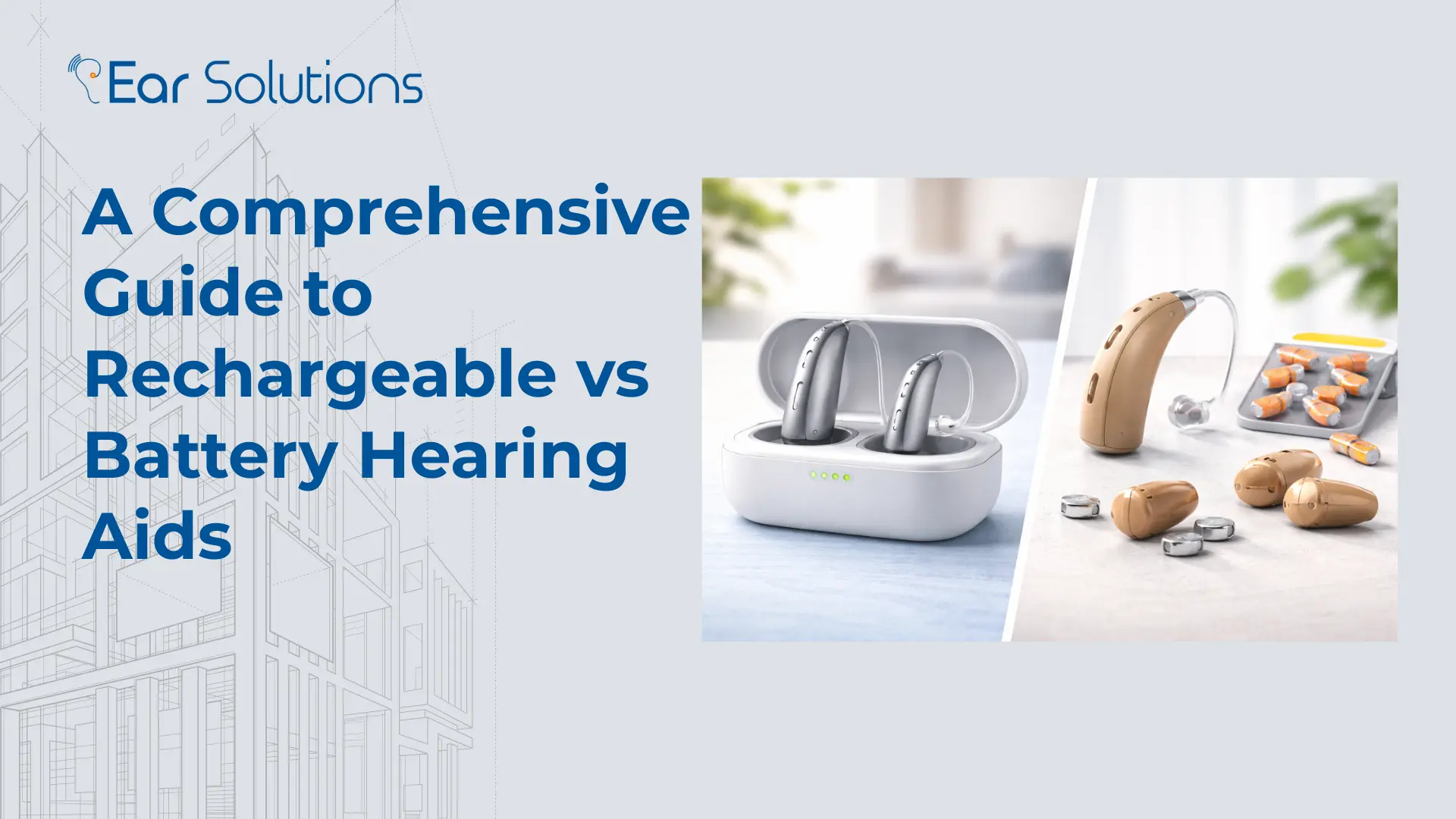
A Comprehensive Guide to Rechargeable vs Battery Hearing Aids
- By imran
Introduction:
If you’ve been told you need a hearing aid, one of the first questions you’ll face is simple but important: should you go rechargeable or stick with traditional batteries? It’s not just a technical question. It affects your daily routine, your wallet, and your peace of mind. The good news? There’s no universally “wrong” answer, only the answer that’s right for you, which needs a discussion over Rechargeable vs Battery Hearing Aids so that you can choose the right one
Let’s walk through everything you need to know.
Summary:
Choosing between rechargeable and battery hearing aids can feel overwhelming. This guide breaks it all down in plain English, from daily convenience and long-term cost to who each type works best for. Whether you’re buying your first hearing aid or considering a switch, this guide has you covered.
Key takeaways
- Rechargeable hearing aids are more convenient but cost more upfront
- Battery hearing aids are affordable and widely available
- Your lifestyle, budget, and dexterity all play a role in the decision
- Long-term costs of both options are closer than most people think
- The best place to buy hearing aids matters as much as the type you choose
Table of Contents
What Are Rechargeable Hearing Aids?
Rechargeable hearing aids work just like your smartphone. You wear them all day, place them in a charging case at night, and they’re ready to go by morning. No tiny batteries to swap out. No fumbling with small compartments.
Most rechargeable models today use lithium-ion technology, which gives you a full day of use, typically 16 to 24 hours, on a single charge. Some premium models even offer quick-charge options, giving you a few hours of use from just a 30-minute charge.
They’re sleek, modern, and designed with busy lifestyles in mind.
What Are Battery Hearing Aids?
Battery hearing aids run on small zinc-air disposable batteries. These batteries come in different sizes (usually labelled 10, 312, 13, or 675) and need to be replaced every few days to a couple of weeks, depending on how much you use your hearing aid and which battery size it takes.
They’ve been around for decades and remain incredibly popular. They’re simple, reliable, and easy to find at pharmacies and grocery stores all across the US.
If a battery dies, you just pop in a new one, no charging needed.
Rechargeable vs Battery Hearing Aids: Key Differences
| Feature | Rechargeable | Battery |
|---|---|---|
|
Daily Convenience |
Very high: just charge overnight |
Moderate: batteries need replacing |
|
Upfront Cost |
Higher |
Lower |
|
Ongoing Cost |
Low (no batteries to buy) |
Moderate (regular battery purchases) |
|
Best For |
Active users, seniors with limited dexterity |
Budget-conscious users, travelers |
|
Availability |
Available at most hearing care providers |
Widely available everywhere |
|
Battery Life Per Charge |
16–24 hours |
Varies (3–14 days per battery) |
|
Battery Life Per Charge |
16–24 hours |
Varies (3–14 days per battery) |
|
Environmental Impact |
More eco-friendly |
More waste over time |
Cost of Hearing Aids: What Should You Expect to Pay?
The cost of hearing aids in the US varies quite a bit depending on the technology level, brand, and where you buy them.
On average:
- Entry-level hearing aids start around $1,000–$1,500 per pair
- Mid-range options fall between $2,000–$4,000 per pair
- Premium models can go up to $6,000 or more per pair
Rechargeable hearing aids tend to sit slightly higher in each price tier compared to their battery-powered counterparts, usually by $200–$500.
However, when you factor in the cost of batteries over time, the gap narrows. A typical battery hearing aid user in the US spends $50–$150 per year on batteries alone. Over five years, that adds up.
It’s also worth knowing that some insurance plans, including certain Medicare Advantage plans, may cover part of the cost. Always check your coverage before buying.
Who Should Choose Rechargeable Hearing Aids?
Rechargeable hearing aids are a great fit if:
- You have trouble with small objects. Arthritis or limited finger dexterity makes handling tiny batteries frustrating. A simple charging dock removes that hassle entirely.
- You live an active lifestyle. Swimmers, hikers, and gym-goers appreciate not worrying about whether they packed spare batteries.
- You want a streamlined routine. If you already charge your phone at night, adding your hearing aids to that routine feels completely natural.
- You’re environmentally conscious. Fewer disposable batteries means less waste going into landfills.
Who Should Choose Battery Hearing Aids?
Battery hearing devices still make a lot of sense if:
- You travel frequently. International travellers especially love battery hearing aids because the charging infrastructure varies. Batteries, on the other hand, are available almost anywhere in the world.
- You’re on a tight budget. The lower upfront cost of battery models is a real advantage, especially if you’re buying hearing aids for the first time.
- You want a backup option. With batteries, you can always keep a spare pack in your bag or glove compartment. With rechargeable models, if you forget to charge overnight, you could be stuck.
- You prefer tried-and-tested technology. Battery hearing machines have decades of proven performance behind them.
Best Place to Buy Hearing Aids
Finding the best place to buy hearing aids is just as important as choosing the right type. Here’s what to look for:
Find the best place to buy a hearing aid. Audiologists and hearing specialists remain the gold standard. They test your hearing, recommend the right device, and provide proper fitting, which makes a huge difference in how well a hearing aid actually works for you.
Hearing care clinics often offer trial periods, follow-up adjustments, and ongoing support. This matters more than most people realise. A poorly fitted hearing aid, even an expensive one, won’t perform well.
Things to watch out for:
- Online-only purchases with no professional fitting
- No trial period offered
- Lack of after-sales support or maintenance services
At Ear Solutions, we combine professional audiological care with a wide selection of both rechargeable and battery hearing aids across all price ranges, so you get expert guidance without the pressure.
Conclusion
At the end of the day, the rechargeable vs battery hearing aids debate comes down to your personal lifestyle, budget, and daily needs.
If you want simplicity and don’t want to think about batteries ever again, rechargeable is probably your answer. If flexibility, lower upfront cost, and worldwide compatibility matter more to you, battery-powered hearing aids are still an excellent choice.
The most important step? Get a proper hearing evaluation from a qualified professional. The right technology, properly fitted, makes all the difference. Visit Ear Solutions to explore your options and find the hearing aid that truly fits your life.
FAQ
How long do rechargeable hearing aid batteries last before needing replacement?
The built-in lithium-ion battery in most rechargeable hearing aids lasts around 4–5 years before it may need replacing by a professional.
Are rechargeable hearing aids waterproof?
Many modern rechargeable models are water-resistant, but not all are fully waterproof. Always check the IP rating before buying.
What size battery do most hearing aids use?
Size 312 is the most common in the US, but it depends on the model. Your hearing specialist will guide you on the right size.
Can I switch from battery to rechargeable hearing aids?
Yes, but it usually means getting a new device since the two technologies are built differently. Your audiologist can help you upgrade smoothly.
Does insurance cover the cost of hearing aids?
Some Medicare Advantage plans and private insurance policies cover hearing aids partially or fully. It varies by plan, so always confirm with your provider before purchasing.
