
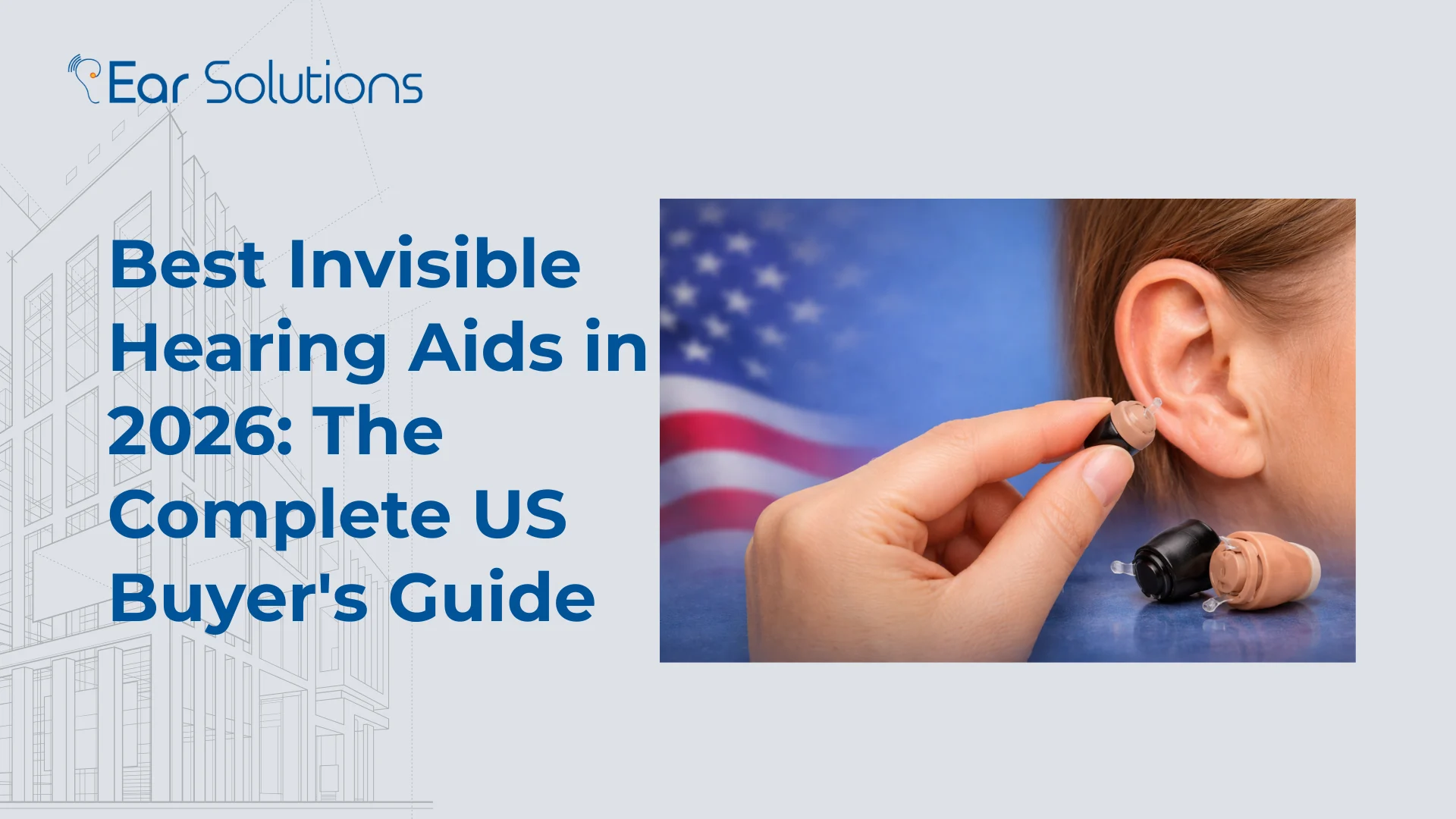
Best Invisible Hearing Aids in 2026: The Complete US Buyer’s Guide
- By imran
Introduction
Hearing loss affects roughly 48 million people, yet stigma and vanity keep millions from seeking help. Enter the era of invisible hearing machines: tiny, powerful, and practically undetectable devices that sit deep inside the ear canal, offering crystal-clear sound without anyone knowing you’re wearing one. Whether you’re navigating a boardroom meeting, enjoying a weekend hike, or streaming your favourite podcast, today’s invisible hearing aids are smarter, sleeker, and more connected than ever before.
This guide breaks down everything you need to know about invisible hearing aids in 2026, from the best models and Bluetooth options to realistic price expectations, so you can make a confident, informed decision.
Summary
Invisible hearing aids (IIC and CIC styles) are the most discreet solutions for mild to moderately severe hearing loss. In 2026, leading brands like Starkey, Phonak, Widex, Signia, and ReSound will offer models with Bluetooth connectivity, rechargeable batteries, AI-powered sound processing, and app controls. Prices range from around $1,500 to $7,000+ per pair, depending on technology tier, and some hearing aids are now available OTC (over-the-counter) for adults with mild to moderate loss.
Key Takeaways
- Invisible hearing aids (IIC/CIC) sit deep in the ear canal and are nearly undetectable.
- The best models in 2026 come from Starkey, Phonak, Widex, Signia, and ReSound.
- Bluetooth connectivity is now available even in some IIC models, enabling direct streaming from phones and TVs.
- Prices range from ~$1,500 to $7,000+ per pair; OTC options start around $200–$1,500.
- A hearing test from a licensed audiologist is recommended before purchasing.
- Insurance and HSA/FSA funds can help offset costs.
Table of Contents
What Are Invisible Hearing Aids?
Invisible hearing aids are custom-fitted or pre-moulded devices designed to sit entirely within the ear canal, making them virtually impossible to detect from the outside. Unlike traditional behind-the-ear (BTE) or receiver-in-canal (RIC) models, invisible aids are engineered for discretion without sacrificing performance.
The two main styles are Invisible-in-Canal (IIC) and Completely-in-Canal (CIC). Both are ideal for people with mild to moderately severe hearing loss who want a natural, low-profile hearing solution. The deep placement in the ear canal also provides a natural sound quality advantage, using the outer ear’s shape to capture and direct sound organically.
Types of Invisible Hearing Aids: IIC vs. CIC
Invisible-in-Canal (IIC) hearing aids sit the deepest in the canal, so far that they’re essentially hidden from view. They’re the smallest hearing aids available and are best for mild to moderate hearing loss. Their drawback: size limits battery capacity and feature space.
Completely-in-Canal (CIC) hearing aids sit slightly closer to the ear opening, making them marginally more visible but still very discreet. CIC models typically offer slightly more power and, in some cases, Bluetooth features that IIC devices can’t always accommodate due to their tiny size.
Both styles are custom-moulded to your ear canal for comfort and sound accuracy.
Best Invisible Hearing Aids in 2026
Here are the best invisible hearing aid categories for the US market this year:
Starkey Evolv AI IIC
Starkey’s flagship invisible model leads the pack with AI-powered sound processing, fall detection, health tracking, and even translation features. It adapts automatically to different sound environments and is made in the USA. Best for: tech-forward users who want more than just hearing assistance.
Phonak Virto Lumity Black
Phonak’s Virto line is custom-made from a 3D scan of your ear. The Lumity platform delivers exceptional speech clarity in noisy environments through its AutoSense OS 5.0 technology. The “Black” edition comes in a sleek dark finish for those who want stylish discretion.
Widex Moment Sheer IIC
Widex is renowned for the most natural sound quality in the best invisible hearing aid industry. The Moment Sheer uses ZeroDelay technology to eliminate the “processed” sound effect virtually, making music and conversation feel remarkably lifelike.
Signia Silk X
Signia’s Silk X is unique: it’s a ready-to-wear CIC that doesn’t require custom fitting. Using soft silicone “click sleeves,” it can be fitted and worn the same day. Great for first-time users who want to try an invisible style quickly.
ReSound Nexia CIC
ReSound’s Nexia line brings Bluetooth Low Energy Audio to even its smaller models, offering direct streaming from iPhones and Android devices. Excellent app integration and a strong audiologist network make it a reliable choice.
Invisible Hearing Aids with Bluetooth
Bluetooth connectivity has transformed hearing aids, and it’s now trickling down to even the smallest invisible models. Here’s what to know:
What Bluetooth does: Invisible hearing aids with Bluetooth allow you to stream audio directly from your smartphone, TV, or computer into your hearing aids. You can take calls, listen to music, watch videos, and adjust settings via an app; all wirelessly.
Best Bluetooth invisible hearing aids in 2026:
- ReSound Nexia CIC: Bluetooth LE Audio for Android and iPhone
- Starkey Evolv AI: 2.4 GHz Bluetooth with hands-free calling
- Phonak Virto Paradise: Universal Bluetooth for any device (not just Apple)
- Signia Silk X: Bluetooth streaming via a relay accessory
Limitation to know: True IIC (invisible-in-canal) models have less room for Bluetooth chips. Many Bluetooth-enabled “invisible” models are technically CIC. If Bluetooth is a priority, a CIC may be a better fit than a pure IIC.
Invisible Hearing Aids Prices in 2026
Invisible hearing aids price is depend on the engineering and customisation involved.
| Tier | Price Per Pair | What You Get |
|---|---|---|
|
Premium |
$5,000 – $7,500+
|
AI processing, Bluetooth, rechargeable, full app control |
|
Advanced |
$3,000 – $5,000 |
Strong noise reduction, Bluetooth, and good app features |
|
Mid-Range |
$1,500 – $3,000 |
Solid performance, limited Bluetooth or connectivity |
|
OTC / Budget |
$200 – $1,500 |
Self-fit, basic amplification, mild loss only |
Cost factors include:
- Custom fitting vs. ready-to-wear
- Technology tier (AI features, channels, processing speed)
- Audiologist fees and follow-up visits
- Warranty and loss/damage coverage
Ways to reduce costs:
- HSA/FSA: Hearing aids are eligible expenses
- Veterans’ benefits: VA covers hearing aids for eligible vets
- Insurance: Some plans cover partial costs; check your policy
- Costco Hearing Centres: Offers discounted prescription aids from major brands
- Financing: Many audiologists and manufacturers offer payment plans
How to Choose the Right Invisible Hearing Aid
Choosing correctly depends on more than just aesthetics. Before buying the best invisible hearing aids, consider:
- Degree of hearing loss: IIC/CIC styles are typically suited for mild to moderately severe loss. Severe or profound loss may need more powerful BTE or RIC models.
- Ear canal size: Tiny ear canals may not accommodate IIC devices; your audiologist will assess this.
- Dexterity: Invisible aids are small and can be tricky to handle. Users with arthritis or limited finger dexterity may prefer models with easy-grip features or rechargeable cases.
- Connectivity needs: If you frequently stream audio or make phone calls, prioritise Bluetooth-enabled CIC models.
- Lifestyle: Active users benefit from moisture-resistant ratings; music lovers should look for brands like Widex, known for audio fidelity.
OTC vs. Prescription Invisible Hearing Aids
Since the FDA opened the OTC invisible hearing aid market in 2022, Americans with mild to moderate hearing loss can purchase aids without a prescription. In 2026, options have expanded significantly.
- OTC pros: Lower cost, immediate access, no audiologist required. OTC cons: No custom fitting, no professional programming, may not address the root cause of hearing loss.
- Prescription pros: Custom-fitted, professionally programmed, better outcomes for moderate-to-severe loss. Prescription cons: Higher cost, requires audiologist visits.
- Recommendation: For anyone experiencing notable or progressive hearing loss, a licensed audiologist evaluation is strongly advisable before buying any device.
Tips for Getting the Most Out of Your Invisible Hearing Aid
- Give it time: the brain needs 4–6 weeks to adapt to amplified sound; don’t give up early.
- Keep them dry: Use a dehumidifier case nightly to extend device life.
- Clean regularly: Use a wax pick and brush daily; earwax is the number 1 cause of IIC malfunction.
- Schedule follow-ups: Most audiologists include reprogramming visits in the purchase price; use them.
- Download the app: Manufacturer apps let you personalise settings for restaurants, theatres, and outdoor environments.
Conclusion
The best invisible hearing aids in 2026 are nothing short of remarkable; they’re powerful, intelligent, and discreet enough that no one will know you’re wearing them. Whether you want AI-powered sound, Bluetooth streaming, or same-day fitting, there’s an option tailored to your needs and budget. The most important step? Get a proper hearing evaluation. From there, you and your audiologist can select a device that genuinely improves your quality of life, quietly, effectively, and invisibly.
FAQ
Are invisible hearing aids suitable for severe hearing loss?
Generally, no. IIC and CIC styles are best for mild to moderately severe hearing loss. Severe loss typically requires more powerful devices like RIC or BTE models.
How long do invisible hearing aids last?
Most last 4–7 years with proper care. Custom-moulded models may need to be remade if the ear canal shape changes significantly.
Can I shower or swim with invisible hearing aids?
Most are water-resistant but not waterproof. Always check the IP rating and remove them before swimming or showering unless specified otherwise.
Do invisible hearing aids work with iPhones and Android phones?
Many do, but compatibility varies by brand and model. Phonak’s Virto Paradise offers universal Bluetooth, while Starkey and ReSound are optimised for Apple. Always verify compatibility before purchase.
Are invisible hearing aids covered by Medicare?
Traditional Medicare does not cover hearing aids. However, some Medicare Advantage plans do. Check your specific plan for details.
-
Tags :
- advantage of hearing aids
- best hearing aids
- best hearing aids in 2026
- best invisible hearing aids
- cost of hearing aids
- hearing aid
- hearing aid centers near me
- hearing aid stores
- hearing aids
- hearing loss
- hearing loss test
- Invisible Hearing Aids
- invisible hearing aids prices
- Invisible hearing aids with Bluetooth
