
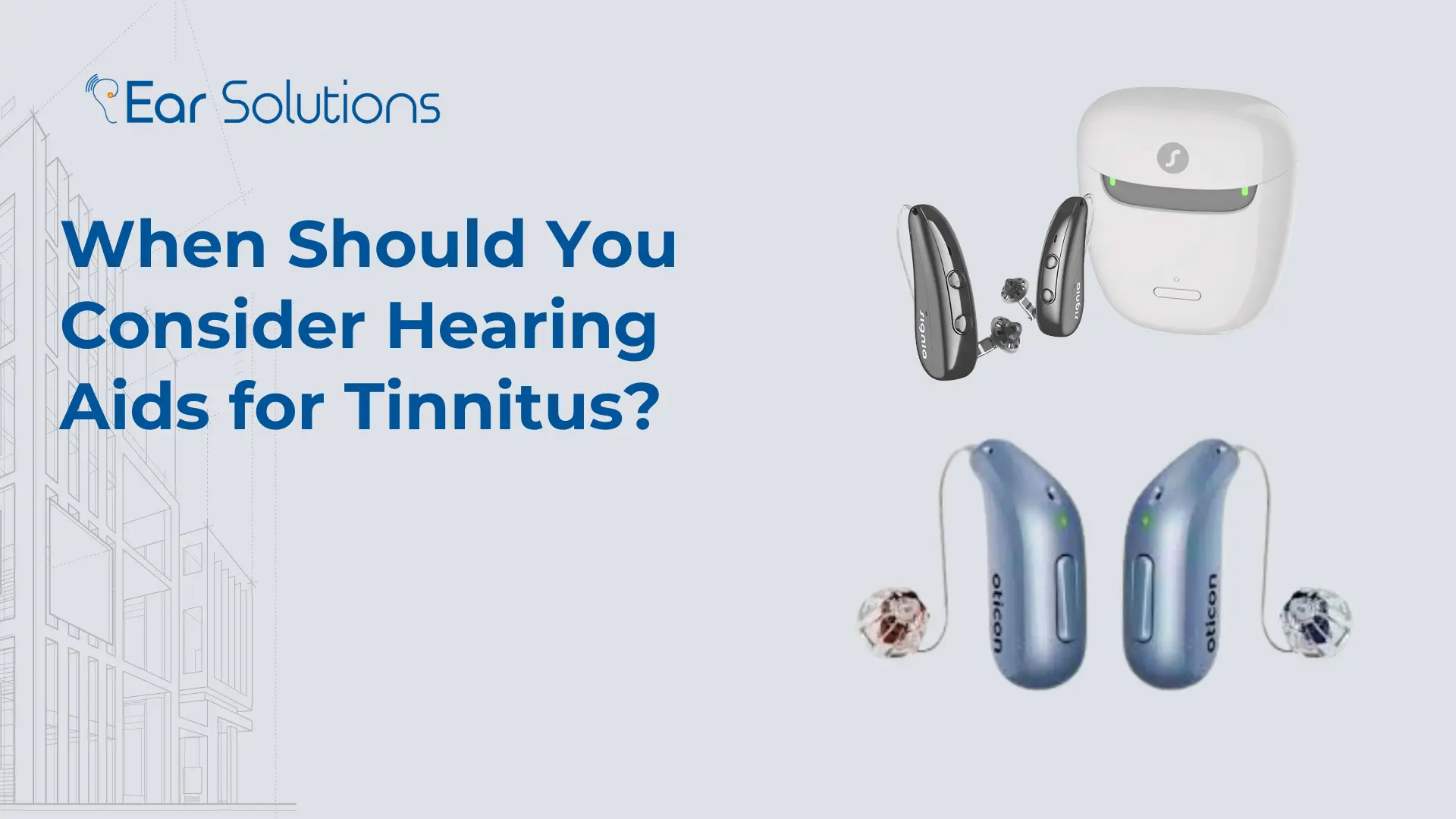
When Should You Consider Hearing Aids for Tinnitus?
Introduction
Tinnitus is a common hearing problem and millions of people worldwide suffer with this. There are some common signs in tinnitus patients such as persistent ringing, buzzing, hissing, or whistling sound in the ears that occurs without any outer source. In many individuals it’s temporary and mild, but for others, it can become a long-term problem that creates problems with sleep, concentration, and daily life.
In many cases, tinnitus is directly connected to hearing loss. When the brain gets less sound signals due to damaged hearing cells, it may require by creating phantom sounds, what we consider as tinnitus. This is why hearing aids for tinnitus are highly recommended as a good solution for many people experiencing both hearing loss and ringing in the ears.
knowing when you should consider hearing aids as part of your tinnitus treatment can help you take the right steps toward better hearing and improved quality of life.
Summary
Tinnitus can be intense and annoying, especially when it becomes constant. In the beginning people do not realise that hearing aids can play a significant role in tinnitus management. By amplifying environmental sounds and using tinnitus masking technology, new technology hearing aids help reduce the contrast between silence and ringing sounds.
If tinnitus is caused by hearing loss, hearing aids may give double benefits, improving hearing clarity while also reducing the perception of ringing in the ears. Understanding the signs that indicate you may require hearing aids can help you seek better treatment fast and experience long-term relief.
Key Takeaways
- Tinnitus is often linked with hearing loss and may worsen when untreated.
- Hearing aids for tinnitus amplify surrounding sounds, reducing the prominence of ringing in the ears.
- Modern hearing aids include tinnitus masker features that produce soothing background sounds.
- Hearing aids are particularly helpful when tinnitus occurs alongside mild to moderate hearing loss.
- Early intervention can prevent tinnitus from becoming more intrusive or stressful.
- Consulting a hearing specialist an
Table of Contents
Understanding Tinnitus
Tinnitus itself is not a disease but rather a symptom of an attributed illness. People with tinnitus commonly hear sounds such as ringing, buzzing, humming, or clicking in their ears. These sounds may be persistent or irregular and can vary in intensity.
For some individuals, tinnitus may only appear sometimes and cause some kind of discomfort. However, in severe cases, it can significantly affect sleep, focus, emotional health, and overall well-being. For the sake of your hearing care you sometimes need the best hearing aids for tinnitus with the consultation of an expert.
Tinnitus is especially common among people with hearing loss, older adults, and people regularly spending time in loud noises for a longer time.
What Causes Tinnitus?
There are many reasons that cause tinnitus. Some of the most common causes include:
Hearing Loss
Age-related hearing loss or damage to the inner ear hair cells is one of the primary causes of tinnitus.
Noise Exposure
Prolonged exposure to loud sounds from machinery, music concerts, or headphones can damage the auditory system.
Earwax Blockage
Excess earwax can interfere with sound transmission and lead to temporary tinnitus.
Ear Infections or Medical Conditions
Conditions affecting the ear or auditory nerves can sometimes trigger tinnitus symptoms which decide the type of tinnitus treatment you need.
Stress and Fatigue
Emotional stress and lack of sleep can make tinnitus more noticeable and difficult to ignore.
How Hearing Aids Help with Tinnitus
Many people assume hearing aids are only for improving hearing, but they can also play a major role in tinnitus management.
Here’s how hearing aids help reduce tinnitus symptoms:
Amplifying Environmental Sounds
When hearing loss is present, everyday sounds become softer. Hearing aids amplify these sounds, which reduces the contrast between silence and tinnitus, making the ringing less noticeable.
Improving Brain Sound Processing
By restoring access to natural sounds, hearing aids for tinnitus help the brain focus on external audio rather than internal ringing.
Reducing Listening Effort
People with hearing loss often strain to hear conversations. Hearing aids reduce this listening effort, which can also decrease stress levels and tinnitus perception.
What Is a Tinnitus Masker?
A tinnitus masker is a special built-in feature into many modern hearing aids. It generates soothing background sounds that help mask or distract from tinnitus.
These sounds may include:
- White noise
- Ocean waves
- Soft ambient sounds
- Gentle static noise
The purpose of a tinnitus masker is not to eliminate tinnitus completely but to make it less noticeable by providing alternative sounds for the brain to focus on.
Over time, this sound therapy can help the brain adapt and reduce the emotional reaction to tinnitus.
When Should You Consider Hearing Aids for Tinnitus?
Not everyone needs Hearing Aids for Tinnitus but there are certain situations where they can be highly beneficial.
When Tinnitus Occurs with Hearing Loss
If a hearing test shows mild to moderate hearing loss along with tinnitus, hearing aids can address both issues simultaneously.
When Tinnitus Interferes with Daily Life
If the ringing or buzzing becomes persistent and begins affecting concentration, sleep, or communication, hearing aids with tinnitus masking features may help.
When Silence Makes Tinnitus Worse
Many people notice tinnitus more in quiet environments. Hearing aids introduce natural sound amplification that helps reduce this effect.
When Other Treatments Have Limited Results
If other tinnitus treatment methods have not provided sufficient relief, hearing aids may offer an effective alternative.
When Communication Becomes Difficult
Tinnitus often makes it harder to focus on conversations. Hearing aids can improve speech clarity while simultaneously reducing tinnitus awareness.
Best Hearing Aids for Tinnitus: Features to Look For
When choosing the best hearing aids for tinnitus, certain features can make a significant difference in comfort and effectiveness.
Tinnitus Masking Programs
Built-in sound therapy features that generate calming sounds.
Bluetooth Connectivity
Allows users to stream relaxing sounds or music directly from smartphones.
Noise Reduction Technology
Reduces background noise while enhancing speech clarity.
Customizable Sound Therapy
Personalized tinnitus relief programs tailored to the user’s hearing profile.
Rechargeable Batteries
Convenient and reliable for everyday use.
These advanced features help create a comfortable listening experience while providing effective tinnitus treatment.
Other Tinnitus Treatment Options
While hearing aids are highly effective for many individuals, tinnitus treatment may also include other approaches:
Sound Therapy
Using external sounds such as nature sounds or white noise to reduce tinnitus awareness.
Cognitive Behavioral Therapy (CBT)
A psychological approach that helps individuals manage the emotional impact of tinnitus.
Stress Management Techniques
Meditation, relaxation exercises, and better sleep habits can reduce tinnitus intensity.
Medical Treatment
In some cases, addressing underlying medical conditions may help reduce tinnitus symptoms.
A hearing professional can recommend the most suitable combination of treatments based on individual needs.
Conclusion
Tinnitus can be an annoying and regular condition, but modern technology offers several effective ways to manage it. Hearing aids for tinnitus are among the most beneficial solutions, particularly for individuals who experience both hearing loss and ringing in the ears.
By amplifying environmental sounds and providing built-in tinnitus masker features, today’s hearing aids help reduce the notability of tinnitus and improve overall hearing clarity. If tinnitus begins interfering with daily activities or communication, seeking professional advice and exploring hearing aid options can be an important step toward relief.
Early check up and proper treatment can make a significant difference in managing tinnitus and restoring confidence in everyday listening situations.
FAQ
Can hearing aids cure tinnitus?
Hearing aids do not cure tinnitus completely, but they can significantly reduce its perception by amplifying surrounding sounds and providing tinnitus masking features.
Are hearing aids effective for all tinnitus cases?
Hearing aids are most effective when tinnitus is associated with hearing loss. A hearing test can determine whether they are suitable for your condition.
What is a tinnitus masker in hearing aids?
A tinnitus masker is a feature that produces soothing sounds like white noise or ocean waves to help mask the ringing or buzzing sensation in the ears.
How long does it take for hearing aids to help tinnitus?
Many users notice improvement within weeks, although full adaptation may take several months as the brain adjusts to amplified sounds.
Should I get a hearing test before buying hearing aids for tinnitus?
Yes. A professional hearing evaluation helps determine the severity of hearing loss and ensures you receive the most appropriate tinnitus treatment and hearing aid solution.
-
Tags :
- advantage of hearing aids
- best Bluetooth hearing aids
- best hearing aids
- bluetooth hearing aids
- BTE Hearing Aids
- cost of hearing aids
- ear machine
- hearing aid
- hearing aid stores
- hearing loss
- hearing loss test
- Hearing test online
- Invisible Hearing Aids
- latest features of hearing aids
- modern hearing devices
- Phonak hearing aid models
- phonak hearing aids
- Phonak hearing aids near me
- Phonak hearing machine
- signia hearing aids
- Signs of a reduced hearing problem
- types of hearing aids
