
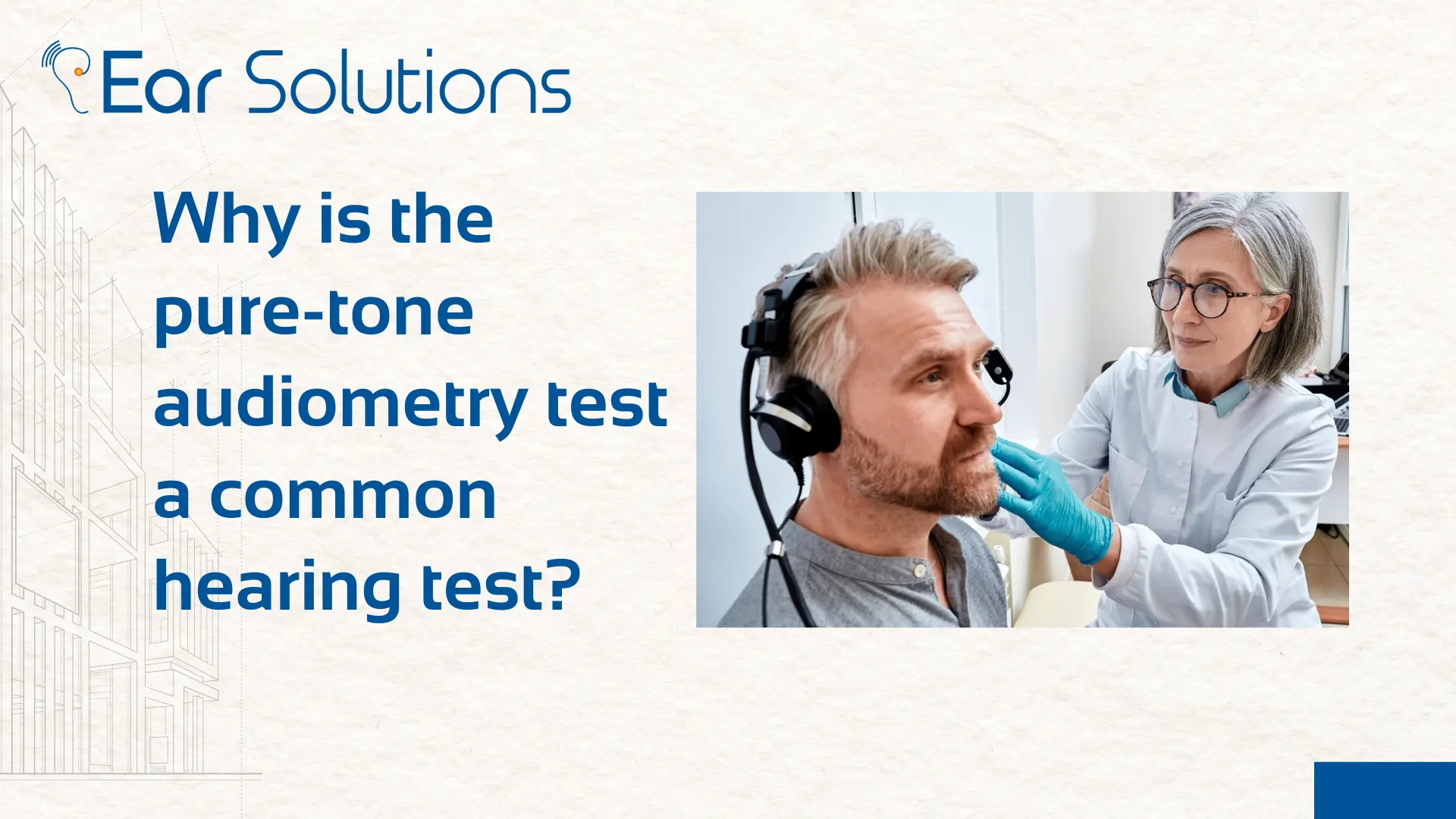
Why is the pure-tone audiometry test a common hearing test?
Introduction:
This is commonly known as the first-line diagnostic assessment. A pure tone audiometry test is one that enables hearing care professionals to determine whether a person is experiencing hearing loss or not. However, a pure-tone audiometry hearing test does not only confirm or rebut a potential diagnosis; it also highlights the seriousness and type of configuration of hearing loss.
Summary:
A standard hearing test that is often used is pure-tone. This type of hearing test assesses how well a person hears at different frequencies and intensities. These results allow hearing health professionals to diagnose hearing loss, the degree of the hearing loss, and the specific frequencies affected. Pure-tone audiometry is a very efficient test that provides accurate and detailed results for hearing loss (via an audiogram) in a manner that is quick, painless, affordable, and efficient, making it the standard for assessing the ability of the individual to hear, as well as for determining the appropriate treatment options.
Key takeaways:
- Pure-tone audiometry meaning: A standard hearing test that measures hearing sensitivity using pure tones.
- It is the first-line and most common hearing assessment.
- The test is accurate, quick, affordable, and non-invasive.
- Results are plotted on an audiogram to determine the type and severity of hearing loss.
- It helps guide treatment decisions such as hearing aids or medical intervention.
- Additional tests may be required in specific cases.
Table of Contents
What is pure tone audiometry?
As you can get it by the name, this type of hearing test uses pure tones at different frequencies to measure hearing acuity. By playing the pure different frequencies to measure hearing acuity. By playing the pure tones at varying frequencies and monitoring the participant’s response, a hearing care professional can determine whether hearing loss is present.
During the pure tone audiometry test, you can get played a particular sound over the different frequencies and volumes. The hearing care professional (HCP) will be going to monitor when the person is not going to hear the sound clearly. This declares at what frequency the particular frequency becomes inaudible for the patient.
These all sound at a different frequency, and the process will be repeated, which follows the HCP to build up a picture of the individual’s hearing sensitivity. A chart that is known as an audiogram is used to plot the points at which most of the participants are not able to get the sound.
Once the test of audiometry is complete, the audiogram shows the patient’s hearing function across a range of frequencies and decibels. This makes sure the HCP compares the individual’s results with commonly accepted hearing norms to determine whether hearing loss is there. More than this, a hearing care professional is allowed to use the results plotted over the audiogram to determine what frequencies are affected and to what degree.
Why is pure-tone audiometry a common hearing test?
After what is pure-tone audiometry, the next question is why this is a standard test for hearing, which happens for a variety of reasons, including:
Accuracy:Generally, this test is considered the “gold standard” of hearing function tests; this test probably delivers high-class, accurate results. Because of this, it is the preferred test among the majority of audiologists
Amount of data produced:When assessing a patient, this test is carried out over each ear. This makes sure the HCP assesses individual hearing loss. As well as identifying a loss of hearing in one or both ears, a pure-tone audiometry test helps you to get an accurate idea of hearing loss and severity.
Speed:Pure tone audiometry hearing tests can be carried out relatively fast. Most of the tests can be completed in around 20-30 minutes. This means audiologists can comprehensively test a greater number of patients within the same time frame.
What are the advantages of pure-tone audiometry hearing tests?
As this test is extremely accurate and a fast way to analyse the hearing function, there are a range of additional benefits associated with the pure tone testing. These include:
Diagnostic usefulness
The range of the information following the audiometry test is highly acceptable to the professionals. In many of the cases patients will not need additional hearing tests and can also access the right treatment and symptom management following one non-invasive standard hearing test.
Minimal equipment required
To get the pure audiometry testing, HCPs simply need to provide a quiet environment, headphones, a recording of the appropriate sounds, and audiograms to record the results.
Low cost
As minimal equipment is needed to conduct the pure tone audiometry testing, they are a relatively low-cost way to assess an individual’s hearing function. They provide highly accurate results for various hearing losses.
What other options are there to assess hearing function?
Although these audiometry tests are often used to diagnose and assess the hearing functions, other additional tests are only needed in some circumstances, such as:
Bone conduction tests
This test probably bypasses the outer and middle ear and uses the vibration to pass away the sounds to your inner ear. Bone conductive tests can be the ones that are used when something is blocking the outer or middle ear or to get to know what specific kind of hearing loss a patient is facing. especially when used in conjunction with the pure-tone audiometry tests.
Tympanometry
This gets in the way of your middle ear function, tympanometry using varying degrees of air pressure to assess the mobility of the tympanic membrane (eardrum) and conduction bones.
Speech testing
This test is routinely used to check how well the patients can differentiate the different environments. By managing the faintest speech an individual can hear at least 50% of the time, their speech recognition threshold (SRT) can be determined.
Auditory brainstem response (ABR)
Most of the audiologists typically use ABR testing to know whether a patient is facing sensorineural hearing loss or not. The individual’s brain waves are monitored to confirm whether activity occurs in response to the sound.
Acoustic reflex testing
The stapedial muscle stiffness responds to the loud sounds when you have normal hearing function present. By monitoring the stapedial reflex, hearing care professionals can assess some elements of hearing function.
Otoacoustic emissions (OAEs)
when we mostly see the cochlea is stimulated to assess its response, whether a blockage in the ear canal exists or whether the hair cells of the cochlea have been subject to damage.
Who Should Get a Pure-Tone Audiometry Test?
You should have a pure-tone audiometry test if you:
- Think that you have problems hearing
- Ask people to repeat themselves frequently
- Turn up the volume of the TV or phone regularly
- Are in a workplace or home environment where you are regularly exposed to loud noise
- Are an older adult who needs to be screened for age-related hearing loss
- Are a child experiencing delays in learning new words or speaking
- Experience tinnitus (ringing in your ears)
The sooner you get tested, the sooner you’ll catch the problem so you can get treatment before it worsens.
Conclusion
There are many methods of performing an audiometric assessment. While a comprehensive battery of hearing tests may be needed to identify complicated hearing problems or congenital impairment, often fewer tests will be needed to diagnose and evaluate hearing loss for most people.
Pure tone audiometry test produces a large amount of data and requires very little equipment and is inexpensive and non-invasive; therefore, pure tone audiometry testing is considered to be the gold standard for audiometric testing and is commonly the first step in audiometric testing.
FAQ
What is pure-tone audiometry?
Pure-tone audiometry is a hearing test that assesses your ability to hear tones of different pitches and volumes by presenting the sound of pure tones to you.
Is the pure-tone audiometry test painful?
The pure-tone audiometry test is not painful in any way, is non-invasive (does not enter into the body) and does not require any sort of anaesthesia.
How long does the test take?
The average amount of time it takes for a person to complete a pure-tone audiometry test is approximately 20–30 minutes.
Do I need to prepare for the test?
There is no specific way you need to prepare for the test; however, you should refrain from being exposed to noises of higher than normal levels prior to coming in for your audiometry test.
Can pure-tone audiometry detect all types of hearing loss?
Pure-tone audiometry can identify the existence, type and extent of hearing loss when used in conjunction with other types of hearing tests (such as bone conduction testing).
