
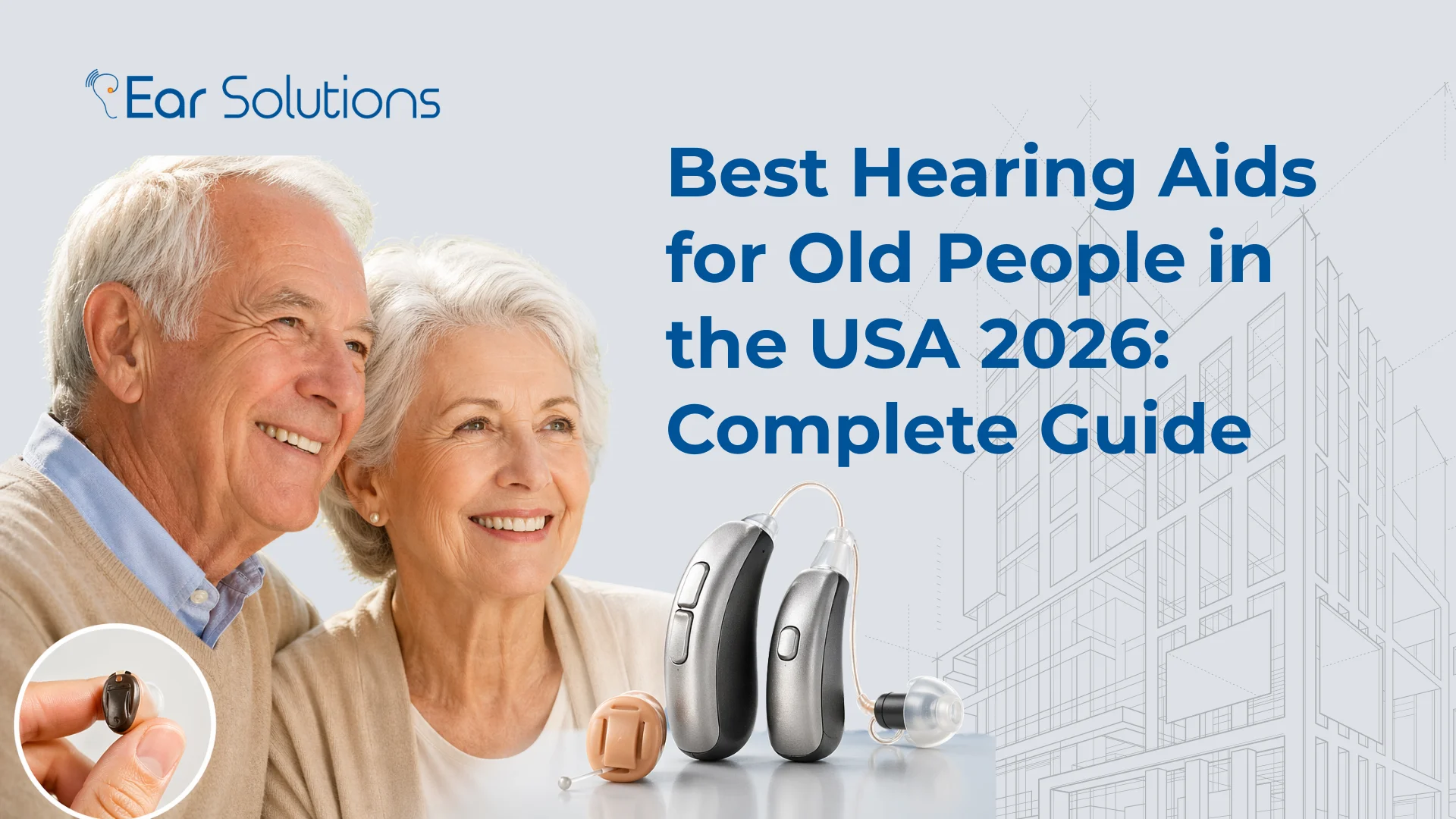
Best Hearing Aids for Old People in the USA 2026: Complete Guide
There is a specific kind of quiet that settles over someone who has stopped trying to follow conversations they can no longer hear clearly. It does not happen overnight. It creeps in so slowly that sometimes the person going through it does not even notice how much they have pulled back until someone they love gently says something.
The dinner table grows louder for everyone else while one person smiles and nods, quietly hoping the conversation moves on before anyone asks them a direct question. The television volume climbs a little higher each month. Phone calls that used to last an hour start wrapping up in five minutes. Invitations to gatherings that once felt exciting start feeling like something to survive rather than enjoy.
For millions of older Americans, this is not an occasional rough day. This is just a simple day. Not because they have chosen to step away from the people and moments they love, but because untreated hearing loss has made staying fully present feel genuinely exhausting. The truth is that the right hearing aids for old people can change this picture in ways that go far deeper than simply turning up the volume on the world. This guide will walk you through everything you need to know to get there.
Summary
This guide is written for older adults thinking about hearing aids for the first time and for the family members trying to help someone they love finally take that step. It covers what actually makes the best hearing aids for old people, which styles hold up best in everyday life, how to find a skilled audiologist worth trusting, and what makes a genuinely good hearing aid shop different from one that is simply trying to move products off a shelf.
Key Takeaways
- Hearing loss affects one in three Americans over 65 and two in three over 75, and most wait far too long before doing anything about it.
- The best hearing aids for old people put comfort, simplicity, and real-world performance first.
- Your audiologist matters more to your outcome than the brand you choose.
- A good hearing aid shop will support you long after the fitting is done.
- Modern devices are far smaller and smarter than most people imagine before they actually see them.
Table of Contents
Why Hearing Loss in Older Adults Is More Serious Than It Looks
Most families treat hearing loss in an older parent or grandparent as just one of those things. Part of aging. Something you work around rather than fix. It is an understandable reaction, but the research is pretty clear that this attitude carries a cost that most people do not see coming until they are already living with the consequences of it.
Age-related hearing loss affects around half of all adults over 75 in the United States. And despite being that common, the average older adult waits somewhere between seven and ten years after first noticing a problem before they ever walk into a hearing aid shop or book an appointment with an audiologist. Seven to ten years is a long time to be struggling quietly through something that has a real and workable solution.
What makes that waiting period genuinely serious is what it does in the background. The best audiologists in NY have consistently connected untreated hearing loss in older adults to faster cognitive decline, higher rates of depression, deeper social withdrawal, and a meaningfully greater risk of dementia. These are not minor footnotes. They are significant health outcomes tied directly to the daily strain of trying to navigate life without proper hearing support. Getting the right hearing aids for old people is not about vanity. For a lot of older adults, it is one of the most important health decisions on the table.
What Actually Makes a Hearing Aid Right for an Older Person
Here is something worth knowing before you start looking at devices. Not everything sold in a hearing aid shop is actually designed with older users genuinely in mind. A device that performs brilliantly for a 45-year-old navigating a busy work life might be completely wrong for a 73-year-old who spends most of their time at home, with family, or at their community or place of worship.
The best hearing aids for old people tend to share the same core qualities. They are easy to handle day to day because even mild arthritis or reduced finger dexterity can turn a fiddly device into a genuine daily frustration. They are comfortable enough to wear from morning until evening without causing soreness. And they perform well in the environments older adults actually live in, meaning quiet home settings and small group conversations, not open-plan offices or loud commuter trains.
Rechargeable batteries deserve a proper mention here because they have changed things significantly for older users. The old routine of replacing tiny disposable batteries every few days was one of the most common and persistent complaints from older hearing aid wearers for years. Most quality devices today charge on a simple overnight dock and run through an entire day on a single charge. That one improvement alone has made daily use far more realistic for a huge number of people.
Simple controls matter just as much. Some devices come loaded with settings that require a smartphone app to navigate. For an older adult who just wants to put their hearing aids in and get on with their morning, a device that works reliably and intuitively from day one will always serve them better than one packed with features they will never touch.
Best Hearing Aid Styles for Older Adults in 2026
Behind the Ear
This is the style the best audiologist in New York recommends as a starting point for older adults, and the reasons are straightforward. The main body of the device sits comfortably behind the ear and connects via a small tube to a custom earpiece. It is easy to handle, works across almost all types and degrees of hearing loss, and is simple to clean and maintain. For someone new to hearing aids, this style tends to offer the most manageable and comfortable introduction.
Receiver in Canal
A slimmer and slightly more discreet variation. The receiver sits inside the ear canal itself, which produces a more natural sound quality that many users find easier to settle into. Popular among older adults who want something a little less visible without giving up performance.
In the Ear
Custom molded to fit the shape of your outer ear. These are larger than canal styles, which actually works in their favor for older users because they are considerably easier to pick up, insert, and remove each day. A practical and reliable choice.
Completely in Canal
The most discreet option, sitting almost entirely inside the ear canal. These work best for older adults who do not have significant dexterity challenges since they require more precise handling to manage comfortably day to day.
A good audiologist at a reputable hearing aid shop will help you work out which of these genuinely fits your hearing, your daily routine, and your physical comfort, not just which one looks best in a catalogue.
How to Find the Right Audiologist
The Ear Solutions audiologist you work with will shape your experience and your outcome more than almost any other factor, including the device you end up choosing. This is worth taking seriously before you commit to anyone.
The right audiologist asks questions before making recommendations. They want to know where you spend your time, who you spend it with, and which specific situations feel most difficult for your hearing right now. They explain your test results in language that actually makes sense rather than moving quickly past the numbers. They show you options across a range of styles and prices rather than nudging you toward whatever suits their margins best.
Look for fully licensed professionals with solid credentials and a genuine reputation built on patient care rather than sales volume. Word of mouth from other older adults who have been through the process is one of the most reliable guides you can find. The best audiologist in NY will also make clear from the start that the relationship does not end at the fitting. Follow-up care, adjustments, and ongoing support are all part of what proper hearing care from a trustworthy hearing aid shop actually looks like in practice.
What to Look for in a Hearing Aid Shop
A good hearing machine shop is not simply a place where devices are displayed and sold. It is an environment where you are properly assessed, clearly guided, and genuinely supported through what is ultimately a significant decision about your health and daily quality of life.
Our hearing aid shop carries products from multiple manufacturers so that your options reflect your actual needs rather than whatever happens to be in stock. They offer a proper trial period so you can wear the devices through your real daily routine before making any final commitment. honest about costs from the very first conversation, with no surprises appearing later. And they schedule follow-up appointments as a standard part of their service, not something you have to chase them down to arrange.
If a hearing aid shop feels rushed, pushes you toward a decision before fully understanding your situation, or seems far more focused on completing the transaction than on asking the right questions, take your time and look elsewhere. The best audiologist and the right shop will never make you feel that way.
The Real Cost of Waiting
It is very human to put this off. Hearing aids feel like a big step, and a lot of older adults worry about the cost, the adjustment, or simply what needing them means. But the cost of waiting is real, and it builds quietly over time in ways that are easy to miss until you look back.
Every year of untreated hearing loss is another year of cognitive strain, another year of gradually stepping back from social connection, and another year of the people around you quietly adapting to a problem that actually has a solution. The adjustment to hearing aids is also meaningfully easier when it happens sooner rather than later because the brain has had less time to lose its familiarity with sounds it has been missing.
The most common thing people say after finally getting properly fitted with the best hearing aids for old people is that they wish they had done it years earlier. That is not a marketing line. It is simply what tends to happen when someone who has been struggling quietly finally gets the right support in place.
How to Help an Older Loved One Through the Process
If you are reading this because someone in your family needs hearing aids for old people and keeps finding reasons to put it off, the most useful thing you can do is lead with patience rather than pressure. Hearing loss carries a lot of emotional weight for many older adults, and being pushed rarely helps.
Start by acknowledging what they are already experiencing rather than telling them what they need to do about it. Offer to go with them to a first appointment at Ear Solutions, so it feels less like something they are navigating on their own. Ask the audiologist questions on their behalf if they feel unsure about raising them. And when things start getting easier after the fitting, say something. Those early wins matter more than most people realize.
The first few weeks with new hearing aids can feel a little overwhelming. Sounds that have been absent for years can feel surprisingly loud and intense at first, and that is completely normal. The brain simply needs time to recalibrate. Knowing that in advance makes it much easier to stay the course rather than giving up during the part of the process that tends to feel hardest.
Conclusion
Hearing loss is one of the most common and most undertreated conditions affecting older Americans today. It is also one of the most treatable, and the hearing aids for old people available in 2026 are genuinely impressive in ways that would have felt out of reach even a decade ago.
Whether you are an older adult ready to take this step for yourself or a family member helping someone you love find their way forward, the most important move is simply to start. The best hearing aids for old people, recommended by a skilled audiologist and supported by a hearing aid shop that genuinely cares about your long-term well-being, can give back something that hearing loss quietly takes away over time. The ability to follow the conversation. To stop guessing. To be fully present with the people and in the moments that matter most to you. That is worth every bit of effort it takes to get there.
FAQs
It depends on your hearing profile and daily lifestyle. A good audiologist and a trusted hearing aid shop will always point you in the right direction after a proper evaluation.
Look for someone who listens first and recommends second. Strong credentials, honest pricing, and genuine aftercare are the three things that matter most.
Multiple brands, a real trial period, transparent pricing, and proper follow-up care. If it feels like a sales pitch from the moment you walk in, trust that feeling.
Most people settle in within two to four weeks. Regular check-ins with your audiologist through that period make a real difference.
Yes, just simple cleaning and overnight charging keep them working well.
-
Tags :
- advantage of hearing aids
- audiologists in NewYork
- best audiologist near me
- best audiologist ny
- best hearing aids for old people
- Best online hearing test free
- best small hearing aids
- Buy hearing aids
- free online hearing test
- hearing aid
- Hearing Aid Centre in NewYork
- hearing aid shop
- hearing aid specialist near me
- hearing aids
- Hearing aids for old people
- Hearing Aids in NewYork
- hearing aids near me
- online hearing test free
- small hearing aid price
- small hearing aids
- small rechargeable hearing aids
- top-rated hearing aids


