
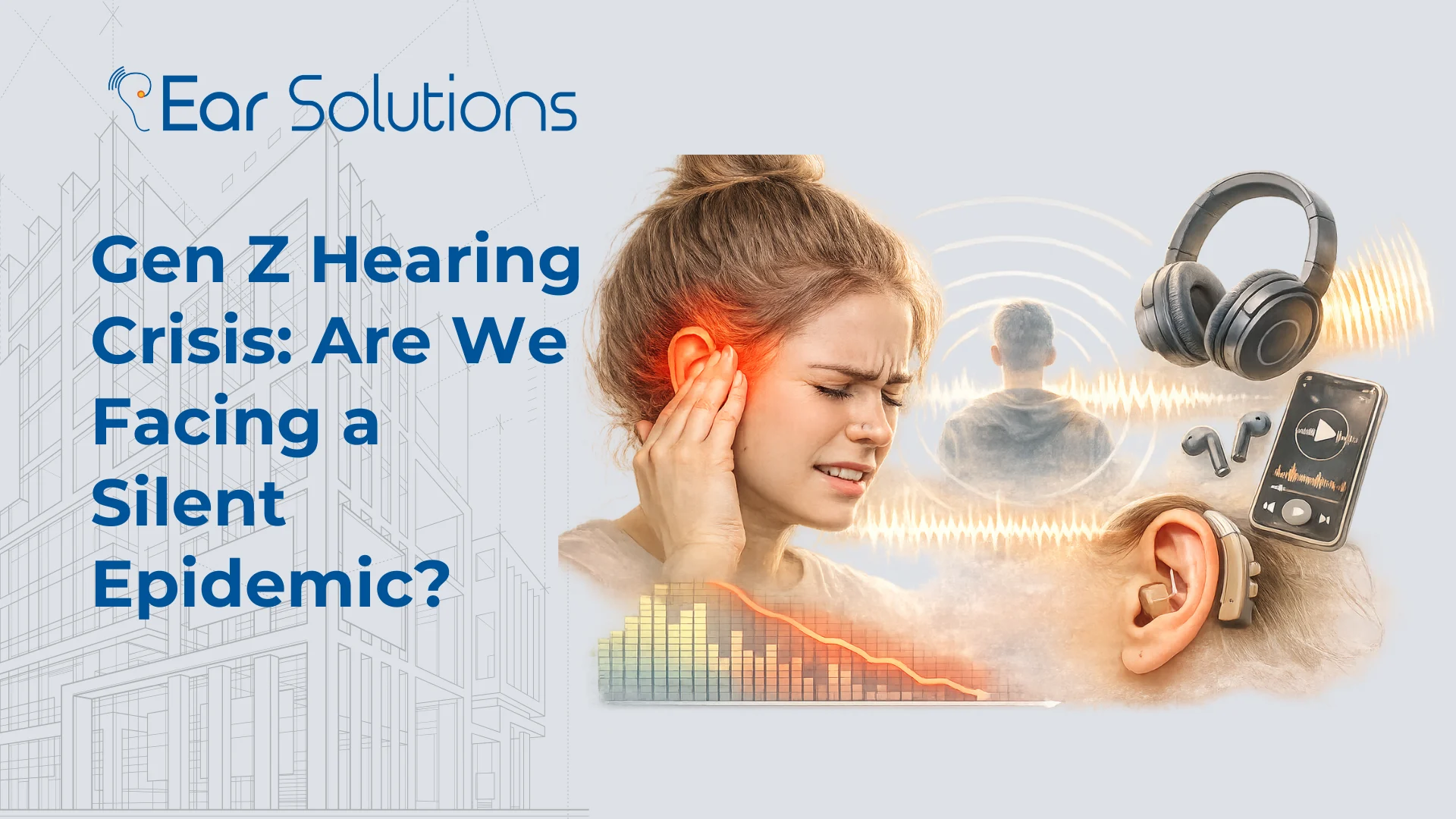
Gen Z Hearing Crisis: Are We Facing a Silent Epidemic?
Let us say something out loud: the health world has been tiptoeing around this for a while now. A generation that grew up healthier, more health-conscious, and more plugged in than any before it is quietly going deaf. Not all at once. Not dramatically. But steadily, irreversibly, and far earlier in life than any previous generation has experienced.
The Gen Z hearing crisis is not a headline invented to scare people. It is a pattern that audiologists, researchers, and public health organizations have been tracking with growing alarm. And if you are between the ages of 12 and 27, or if you love someone who is, this is worth understanding before the damage becomes permanent.
Summary
The short version is this. Gen Z has grown up with personal audio devices that deliver sound directly into their ears at volumes that, over time, cause real and lasting damage. Combined with regular exposure to loud concerts, gaming sessions, and social environments, this generation is developing types of hearing loss that were once associated with much older adults. The causes of hearing loss in young people today are largely preventable, which makes the situation both urgent and genuinely fixable if people act early enough.
Key Takeaways
- Gen Z is experiencing hearing loss at younger ages than any previous generation, largely due to lifestyle and technology habits.
- The most common types of hearing loss in young people are noise-induced and often go undetected for years because they develop gradually.
- The causes of hearing loss in Gen Z are closely tied to earphone use, volume levels, and duration of exposure.
- Early intervention from a qualified audiologist can prevent mild hearing damage from becoming a permanent, life-altering condition.
What Is the Gen Z Hearing Crisis?
The World Health Organization has estimated that over one billion young people worldwide are at risk of permanent hearing loss due to unsafe listening habits. That number is not a projection about some distant future. It is a description of habits that are happening right now, every day, in every city.
Gen Z grew up as the first generation to have personal audio devices as a near-constant companion from childhood. Earphones are not a novelty for this age group. They are the default. Studying, commuting, exercising, gaming, falling asleep, and blocking out the world during a difficult day. The earphones are in. The volume is often higher than it should be.
The problem is not the earphones themselves. The main reasons behind Gen Z hearing loss are the volume level, the duration of exposure, and the fact that most young people have no idea their hearing is being damaged because it does not hurt. Unlike a broken bone or a visible cut, noise-induced hearing damage is silent and gradual. By the time someone notices they are struggling to follow conversations or asking people to repeat themselves, the damage has already been building for years.
The Types of Hearing Loss Affecting Young People
Understanding what is actually happening to young ears requires a brief look at the types of hearing loss that exist, because not all hearing loss is the same, and the kind affecting Gen Z has its own particular character.
Sensorineural hearing loss:
This is the most common type in this age group. It occurs when the tiny hair cells inside the cochlea, which are responsible for translating sound vibrations into signals the brain can understand, become damaged or die. These cells do not regenerate. Once they are gone, they are gone. Noise-induced hearing loss falls into this category, which is why it is considered permanent once it reaches a certain threshold.
Conductive hearing loss:
This is a different matter. This type involves a problem in the outer or middle ear that prevents sound from passing through efficiently. It is often caused by infections, fluid buildup, or physical blockages and is generally more treatable than sensorineural loss. Young people can experience this type, too, particularly those prone to ear infections, but it is less directly tied to the Gen Z hearing crisis driven by audio habits.
Mixed hearing loss:
This is a combination of both types and can occur in younger patients who have underlying susceptibility alongside lifestyle-related damage.
The type most relevant to the Gen Z conversation is sensorineural, because it is the one caused by the exact behaviors that define this generation’s relationship with sound.
The Causes of Hearing Loss in Gen Z
The causes of hearing loss in Gen Z today are not mysterious. They are measurable, documented, and, crucially, preventable in most cases. Here is what is actually driving the crisis.
Personal audio devices:
Personal audio devices are at the top of the list. Listening to music, podcasts, or gaming audio through earphones or headphones at high volumes for extended periods is the single biggest contributor to noise-induced hearing damage in Gen Z. Safe listening guidelines generally recommend keeping volume below 60% of maximum and limiting continuous listening sessions to around 60 minutes before taking a break. Most young people exceed both of those thresholds daily without giving it a second thought.
Loud noise exposures:
Live events and nightlife environments are another significant factor. A typical concert or club environment delivers sound at levels between 100 and 110 decibels. Exposure to that volume for even a few minutes causes temporary Gen Z hearing loss. Regular attendance without any hearing protection turns those temporary changes into cumulative, permanent damage over time.
Competitive gaming sessions:
Gaming deserves its own mention because it is a category that often gets overlooked in discussions about hearing health. Competitive gaming sessions can last for hours, with headset audio including music, game effects, and voice chat all running simultaneously at high volumes. The Gen Z population has grown up gaming in a way no previous generation has, and the auditory load is substantial.
Earphone design:
Earphone design plays a role, too. In-ear earphones, which sit directly in the ear canal, deliver sound closer to the eardrum than over-ear headphones do. This means the same perceived volume can actually be more damaging with in-ear models, particularly the small wired or wireless buds that have become ubiquitous.
There is the normalization of background noise. Gen Z has grown up in environments where sound is constant. Coffee shops, open-plan offices, busy streets, shared living spaces. When your default environment is noisy, the instinct is to turn up whatever you are listening to to hear it properly. This habit of volume compensation compounds all of the other risk factors mentioned above.
Why This Is Being Called a Silent Epidemic
The phrase “silent epidemic” gets used in health writing so often that it can start to feel like a cliché. In this case, it earns its place.
Hearing loss in young people is silent in the most literal sense. It develops without pain. It progresses without obvious symptoms in its early stages. A young person with early-stage noise-induced hearing damage can still hear most conversations, still enjoy music, and still get through daily life without anything feeling obviously wrong. The changes are subtle enough that the brain compensates for them without the person even realising it.
By the time the difficulty becomes noticeable, which often happens in specific situations first, following conversations in noisy restaurants, struggling to hear on phone calls, and needing to ask people to repeat themselves more often than before, the underlying damage has usually been accumulating for years.
This delayed awareness is exactly what makes the Gen Z hearing crisis so serious. Many brands of hearing aids can help them to control their hearing loss, like Signia, Widex, and Starkey. The window for intervention that could slow or halt further damage is often missed entirely because nothing has felt wrong until it is already quite advanced.
What Can Actually Be Done
The good news, and there is genuine good news here, is that most of the causes of hearing loss in Gen Z are behavioral, which means they are changeable.
Volume management is the most impactful thing any young person can do immediately. Most modern smartphones have built-in volume limit settings and listening time reminders. Using them is free and takes about ninety seconds to set up. The 60 per cent volume rule is a reasonable benchmark. Going over it occasionally is not catastrophic. Making it the daily norm for hours at a time is what causes lasting damage.
Taking listening breaks matters more than most people appreciate. The ear needs recovery time after sustained loud sound exposure. Building short, quiet periods into long listening or gaming sessions reduces the cumulative load on the hair cells that cannot be replaced.
Hearing protection at loud events is no longer the social awkwardness it once was. High-fidelity earplugs designed specifically for music and live events reduce volume without muffling sound quality. They are small, inexpensive, and genuinely effective.
Getting a hearing test is the step that most young people skip entirely because they assume hearing tests are for older adults. They are not. A baseline hearing assessment in your early twenties gives you a reference point that is genuinely valuable for monitoring changes over time. If damage is already present, knowing about it early means you can take steps to prevent it from progressing further.
A qualified audiologist at Ear Solutions can assess where your hearing currently stands, identify early signs of damage that you might not have noticed yourself, and suggest to you the suitable AI-moderated hearing aid models, like Phonak Audeo Sphere and Widex Smart RIC, and give you specific guidance based on your actual lifestyle rather than generic advice.
Conclusion
The Gen Z hearing crisis is real, it is already underway, and it is being driven by the causes of hearing loss that are specific to this generation’s relationship with technology and sound. The types of hearing loss developing in young people today are largely preventable if the habits driving them are addressed early. They are largely irreversible if they are not.
This is not a lecture about putting your phone away. It is an honest observation that the ears you have right now are the only ones you will ever have, and the habits you build in your twenties have consequences that will show up in your forties, fifties, and beyond.
Talk to an audiologist at Ear Solutions. Get a baseline test and buy hearing aids of reputable brands like Resound and Oticon. Understand where you stand. The earlier you know, the more you can actually do about it.
FAQ
Is Gen Z really at a higher risk of hearing loss than previous generations?
Yes. Research and clinical data consistently show that younger generations are experiencing noise-induced hearing loss at earlier ages, driven primarily by personal audio device use and exposure to loud environments over extended periods.
What types of hearing loss are most common in young people?
Sensorineural hearing loss, specifically the noise-induced variety, is the most prevalent type in Gen Z. It involves damage to the hair cells in the inner ear and is permanent once it reaches a significant threshold.
What are the main causes of hearing loss in Gen Z?
High-volume earphone and headphone use over long periods, regular attendance at loud concerts or clubs, extended gaming sessions with headset audio, and the habit of raising volume to compensate for noisy environments are the primary causes.
At what volume level does hearing damage begin?
Sustained exposure to sounds above 85 decibels can cause damage over time. Most personal audio devices can reach 100 to 110 decibels at maximum volume, which is well above the safe threshold for extended listening.
Should young people get hearing tests even if they feel fine?
Absolutely. Early-stage hearing damage often produces no obvious symptoms. A baseline hearing test in your twenties gives you a reference point and allows an audiologist to detect any early changes before they progress into more significant loss.
-
Tags :
- affordable hearing aids
- best hearing aid brands 2026
- best hearing aids in the USA
- Buying Hearing Aids
- Causes of hearing loss
- digital hearing aids
- free hearing test online
- Gen Z Hearing Crisis
- Gen Z hearing loss
- hearing aid
- Hearing aid brand
- hearing aid prices
- hearing aid shop
- hearing aid shop near me
- hearing aid store
- Hearing aid store near me
- hearing aids store
- hearing loss test
- Invisible Hearing Aids
- premium hearing aids
- small rechargeable hearing aids
- top-rated hearing aids 2026
- Traditional Hearing Aids
- types of hearing loss
