
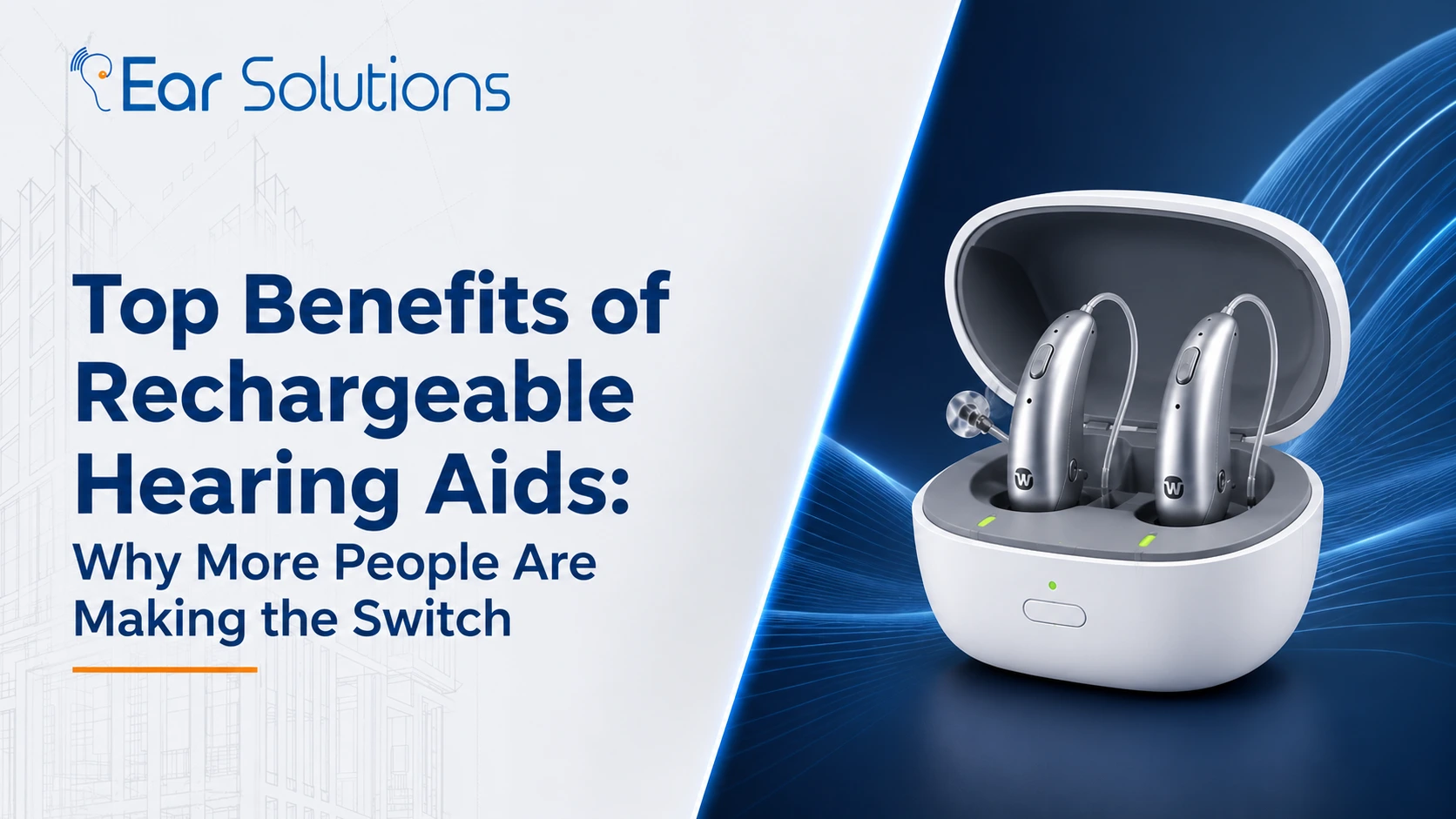
Top Benefits of Rechargeable Hearing Aids: Why More People Are Making the Switch
I still remember the frustration my grandfather used to face every Sunday morning, fumbling with tiny batteries, squinting under the kitchen light, trying to get his hearing aids working before breakfast. It was a whole ritual, and honestly, not a pleasant one.
If you or someone you love wears hearing aids, you probably know exactly what I’m talking about. Those little zinc-air batteries have been the norm for decades, but things are changing fast. Rechargeable hearing aids have quietly become one of the biggest shifts in hearing health, and for good reason.
This isn’t a sales pitch. It’s an honest breakdown of why rechargeable hearing aids are genuinely making life easier for millions of people around the world.
Summary
Rechargeable hearing aids eliminate the need for disposable batteries by using built-in lithium-ion cells that charge overnight, much like your smartphone. They offer a full day of use on a single charge, are easier to handle, more eco-friendly, and increasingly affordable. Whether you’re considering your first pair or thinking about upgrading, understanding these benefits can help you make a smarter, more confident decision.
Key Takeaways
- Convenience: Overnight charging replaces daily battery swapping and is simpler, faster, and less stressful.
- All-day battery life: Most models last 16–30 hours on a single charge, even with Bluetooth use.
- Accessibility: Ideal for anyone with dexterity challenges or vision difficulties.
- Long-term savings: Reduced battery costs can offset the higher upfront price over time.
- Eco-conscious: Far less battery waste compared to disposable options.
- Consistent performance: Steadier voltage delivery throughout the day.
- Child and pet safety: Sealed batteries eliminate swallowing hazards.
- Style variety: Available across most modern hearing aid styles and fits.
The Top Benefits of Rechargeable Hearing Aids
1. No More Battery Hassles: Ever
Let’s start with the most obvious one. Disposable hearing aid batteries are small, slippery, and need replacing every 3 to 14 days, depending on usage. For older adults or anyone with limited dexterity, this can be genuinely challenging.
With rechargeable hearing aids, you simply place them in a charging case at night. Wake up. They’re ready. That’s it. No drawer full of batteries, no mid-dinner power cuts, no panic at the airport.
2. Full Day of Power on a Single Charge
Modern rechargeable hearing aids offer anywhere from 16 to 30 hours of use on a single charge. Even with Bluetooth streaming music, phone calls, and TV, most models comfortably last a full waking day.
Some premium models even come with portable charging cases that give you extra charges on the go, similar to wireless earbud cases. So you’re covered even on long travel days.
3. Better for People with Dexterity Issues
This is one benefit that doesn’t get talked about enough. Arthritis, Parkinson’s, tremors, or just ageing hands can make handling tiny size 10 or size 312 batteries incredibly difficult. Dropping them is common. Inserting them correctly is stressful.
Rechargeable models remove that challenge entirely. Dock them in the charger, and you’re done. It’s a small change that makes a genuinely meaningful difference in daily independence.
4. Cost Savings Over Time
Yes, rechargeable hearing aids might cost more upfront. But think about this: a person using disposable batteries can spend anywhere from $50 to $200 per year just on batteries. Over five years, that adds up.
Rechargeable hearing aids typically have batteries that last 4 to 5 years before needing professional replacement. When you do the math honestly, many users come out ahead financially over the life of the device.
5. Environmentally Friendlier Choice
A single hearing aid user can go through 100 or more disposable batteries every year. Multiply that by the millions of people worldwide wearing hearing aids, and you’re looking at an enormous amount of battery waste.
The best rechargeable hearing aid models significantly cut down on that. If sustainability matters to you, and for a lot of people it does, this is a real, tangible way your health choice also reflects your values.
6. More Consistent, Reliable Performance
Here’s something many people don’t realize: disposable batteries gradually lose power as they drain. This means your hearing aids can start performing differently as the day goes on, sometimes right when you need them most.
Rechargeable lithium-ion batteries tend to hold a steadier voltage throughout the day, which means more consistent sound quality from morning to night. Many users report that their hearing feels more stable and reliable after switching.
7. Safer Around Children and Pets
Button batteries are a known safety risk; they’re one of the most dangerous household items for young children and pets if swallowed. Since rechargeable models have sealed, non-removable batteries, that risk is eliminated.
For grandparents or anyone in a home with little ones around, this peace of mind matters.
8. Increasingly Available in All Styles
A few years ago, rechargeable technology was mostly limited to behind-the-ear styles. That’s no longer true. Today, you’ll find rechargeable options in receiver-in-canal (RIC), in-the-ear, and even some completely-in-canal styles.
The options have expanded dramatically, so you don’t have to compromise on fit or discretion to enjoy the benefits of rechargeable technology.
Conclusion
Rechargeable hearing aids aren’t just a tech upgrade; they’re a quality-of-life upgrade. For people who’ve been dealing with the daily grind of disposable batteries for years, the switch often feels like a weight lifted.
That said, they’re not the perfect choice for absolutely everyone. If you’re in a remote area without reliable electricity, or if you need hearing aids for very long stretches without charging access, it’s worth discussing with your audiologist.
But for the vast majority of people? The benefits are real, practical, and immediately noticeable. If you’re due for an upgrade or exploring hearing aids for the first time, rechargeable technology is absolutely worth putting at the top of your list.
Talk to your hearing care professional, ask to trial a rechargeable model, and see how it fits your lifestyle. Sometimes the best thing you can do for your hearing health is also the simplest.
FAQ
How long does a rechargeable hearing aid battery last before it needs replacing?
Most rechargeable hearing aid batteries last between 4 and 5 years with regular daily charging. After that, the battery can be replaced by a hearing care professional; you don’t need to buy entirely new devices.
Can I use rechargeable hearing aids if there's a power outage?
Yes, as long as your devices are charged. Some charging cases also have built-in battery packs that can charge your hearing aids even without a power outlet, which is helpful for travel or emergencies.
Are rechargeable hearing aids more expensive than regular ones?
The upfront cost is generally a bit higher, but when you factor in the money saved on disposable batteries over several years, many users find them cost-neutral or even cheaper in the long run.
How do I know when my rechargeable hearing aids need to be charged?
Most models have indicator lights or emit a warning tone when the battery is running low. Many also connect to a smartphone app that shows exact battery levels in real time.
Can I overcharge my rechargeable hearing aids?
Modern rechargeable hearing aids are designed with smart charging technology that stops charging automatically once the battery is full. Leaving them in the charger overnight is completely safe.
-
Tags :
- affordable hearing aids
- best hearing aid 2026
- best hearing aid brands 2026
- best hearing aids in the USA
- Buying Hearing Aids
- digital hearing aids
- free hearing test online
- hearing aid
- Hearing aid brand
- hearing aid prices
- hearing aid shop
- hearing aid shop near me
- hearing aid store
- Hearing aid store near me
- hearing aids near me
- hearing loss test
- Invisible Hearing Aids
- premium hearing aids
- top-rated hearing aids 2026
