
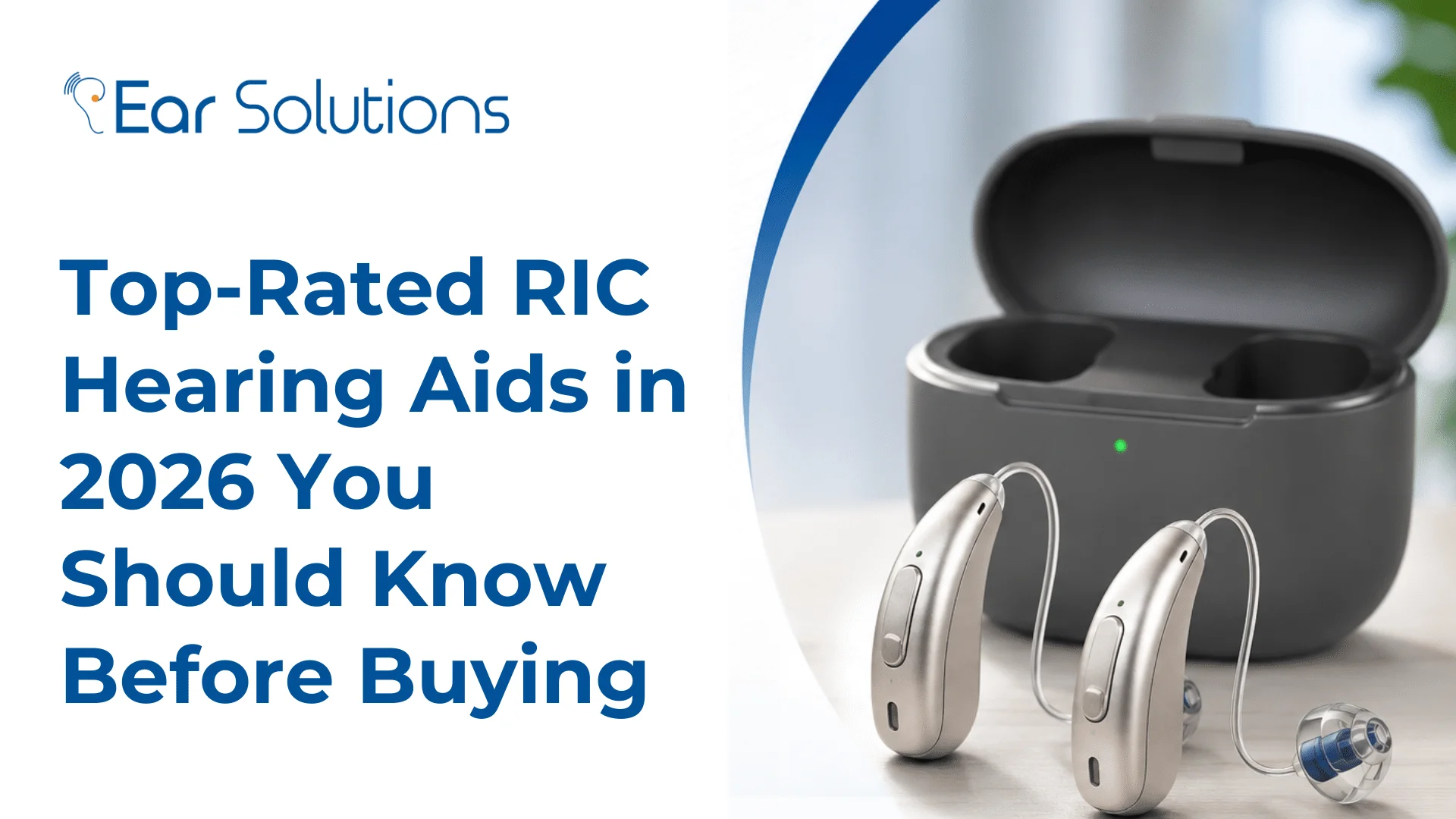
Top-Rated RIC Hearing Aids in 2026 You Should Know Before Buying
If you have been told you need a hearing aid and started doing some research online, you have probably come across the term RIC hearing aids more than once. It stands for Receiver-in-Canal, and in 2026, it remains one of the most popular styles of hearing aids recommended by audiologists around the world. But with so many brands and models available, knowing where to begin can feel overwhelming.
This guide is here to make that easier. Whether you are visiting a hearing aid shop for the first time or coming back after years with an older device, understanding what RIC hearing devices offer and what they cost will help you walk in with confidence.
Summary
This guide covers everything you need to know about RIC hearing aids in 2026. From understanding how they work to comparing RIC hearing aid prices across different brands, and what to look for when choosing a hearing aid shop that will actually support you long after the sale.
Key Takeaways
- RIC hearing aids are among the most recommended styles for mild to moderately severe hearing loss.
- The receiver sits inside the ear canal, which makes the device smaller, more comfortable, and more natural-sounding than older behind-the-ear designs.
- RIC hearing aid prices vary widely depending on the brand, technology level, and features included.
- Buying from a qualified hearing aid shop matters as much as choosing the right brand.
- A proper fitting and follow-up support are just as important as the device itself.
What Are RIC Hearing Aids and Why Are They So Popular
These hearing aids have become the go-to recommendation for many audiologists because they manage to combine a small, discreet design with genuinely impressive sound quality. Unlike older behind-the-ear models, where everything, including the speaker, sits in a casing behind the ear, the best RIC hearing aids move the receiver directly into the ear canal. The result is a more direct, natural path for sound to travel, which many users describe as simply sounding more like real life.
They are also easier to wear for long periods, less likely to cause the plugged-up feeling some people associate with hearing aids, and compatible with a wide range of wireless features that make everyday life considerably easier.
How RIC Hearing Aids Work
The main unit sits discreetly behind your ear. A thin wire runs from that unit down into the ear canal, where a small receiver delivers the amplified sound. The fit is comfortable, the profile is low, and most people around you will not notice you are wearing one unless they look closely.
Because the microphone and receiver are separated, the best RIC hearing aids tend to reduce feedback issues that older styles were known for. They also allow for open fittings, meaning the ear canal is not fully blocked, which suits people who have normal or near-normal hearing in the lower frequencies but need help with higher-pitched sounds.
Top-Rated RIC Hearing Aids in 2026
Phonak Audeo Sphere Infinio
Phonak released this model with a focus on speech clarity in noisy environments, which is the number one complaint among people with hearing loss. The Phonak Audeo Sphere Infinio uses a dedicated chip designed specifically to separate speech from background noise in real time. For someone who struggles at dinner tables, busy markets, or family gatherings, this is a meaningful upgrade over standard noise reduction.
Oticon Intent
Oticon’s RIC hearing aid has built its recent lineup around what it calls the “brain hearing” approach, meaning the technology is designed to support the way your brain naturally processes sound rather than just making things louder. The Oticon Intent model continues that philosophy with improved motion sensing that adjusts settings based on whether you are sitting still, walking, or in a moving vehicle. It is a smart device in the truest sense.
Signia Pure Charge and Go AX
Signia’s AX platform uses two separate processors, one for speech and one for background sound, and layers them together in a way that audiologists describe as giving the brain more information to work with. The Signia Pure Charge & Go AX version is fully rechargeable, which is a practical benefit that more users are prioritising now that they have lived with disposable battery models for years.
Widex Moment Sheer
Widex has long had a reputation for producing hearing aids that sound natural rather than processed, and the Moment Sheer carries that forward. The processing speed is among the fastest in the industry, which reduces the tiny delays between sound entering the microphone and reaching your ear. For music lovers and people who find standard hearing aids sound slightly artificial, this is worth paying attention to.
Starkey Genesis AI
Starkey’s Genesis AI brings health tracking features into the hearing aid conversation in a way that genuinely adds value rather than feeling gimmicky. Beyond hearing support, it tracks activity, detects falls, and can translate languages in real time. For older users living independently or family members who want a bit more peace of mind, these features carry real weight.
RIC Hearing Aids Price: What to Expect
One of the first questions people ask at any hearing aid shop is how much this is going to cost. The honest answer is that it depends on the technology level you need, the brand you choose, and what the clinic includes in the price.
At the entry level, basic RIC hearing aids typically start at $2000 per ear. These devices handle everyday quiet environments reasonably well but may struggle in complex listening situations like crowded rooms or outdoor settings with wind noise.
Mid-range models sit between $2,400 and $3,000 per ear and offer noticeably better noise management, Bluetooth connectivity, and rechargeable options. This is where most people land when balancing budget against real-world performance.
The best RIC hearing aids, like the models listed above, can run from $4,000 per ear or more. The jump in price reflects processing power, the sophistication of the noise handling, and features like AI-based adjustments, app control, and health monitoring.
Always ask your hearing aid shop what is included in the quoted price. Some clinics bundle fitting, adjustments, and a follow-up schedule into the cost. Others charge separately for each visit. Knowing this upfront prevents surprises later.
How to Choose the Right Hearing Aid Shop
The device matters, but so does the place you buy it from. A good hearing aid shop is not just a retail counter. It is a clinical environment where a qualified audiologist evaluates your hearing, matches a device to your specific loss pattern, fits it properly to your ear, and supports you through the adjustment period that follows.
Look for a hearing aid shop that has a proper soundproof testing room. A hearing test done in an open room without acoustic isolation does not give accurate results, and inaccurate results lead to the wrong recommendation. Ask about the qualifications of the person who will be handling your evaluation. Our trained audiologist at Ear Solutions holds a BASLP or MASLP qualification and is equipped to interpret results and make clinical decisions, not just sell a product.
Check whether a trial period is offered. Reputable clinics typically offer two to four weeks with a device before any final commitment. This matters because hearing aids take time to adjust to, and what sounds right in a quiet consultation room may need fine-tuning once you are back in your daily life.
Ask about after-sales support. How many follow-up visits are included? Can settings be adjusted remotely through an app? Is there a warranty, and what does it cover? These practical questions separate a shop that is genuinely invested in your long-term hearing health from one that is simply focused on closing a sale.
Conclusion
They are comfortable, discreet, technologically capable, and available across enough price points that most people can find something that fits both their hearing profile and their budget. RIC hearing aids have earned their popularity honestly. But the device itself is only part of the equation.
Ear Solutions is staffed by people who know what they are doing and are committed to supporting you properly, making a difference that no product brochure can capture. Start with a proper hearing evaluation, ask the questions that matter, and take the time to find care you can trust. Your hearing is worth that.
FAQ
What does RIC stand for in hearing aids?
RIC stands for Receiver-in-Canal. It refers to a style of hearing aid where the speaker or receiver is placed inside the ear canal rather than in the main body of the device behind the ear.
Which is the best RIC hearing aid in 2026?
Top-rated models include the Phonak Audeo Sphere Infinio, Oticon Intent, Signia Pure Charge and Go AX, Widex Moment Sheer, and Starkey Genesis AI. The best choice depends on your specific hearing loss, lifestyle, and budget.
What is the average RIC hearing aid price in USA?
Entry-level models start around $2000 per ear. Mid-range devices typically cost between $2,400 and $3,000 per ear. Premium models can cost $4,000 per ear or more.
What should I look for in a hearing aid shop?
Look for a shop with a soundproof testing room, qualified audiologists, multiple brand options, a trial period of at least two to four weeks, and clear information about follow-up support and after-sales care.
Can I try a RIC hearing aid before buying it?
Yes. you can try our reputable hearing aid shop – Ear Solutions should offer a trial period so you can experience the device in your real-world environments before committing to a purchase.
-
Tags :
- affordable hearing aids
- best hearing aid 2026
- best hearing aids in the USA
- best RIC hearing aids
- Buying Hearing Aids
- digital hearing aids
- free hearing test online
- hearing aid
- Hearing aid brand
- hearing aid prices
- hearing aid shop
- hearing aid shop near me
- hearing aids near me
- hearing loss
- Invisible Hearing Aids
- Oticon Intent
- Phonak Audéo Sphere Infinio
- RIC hearing aids
- ric hearing aids price
- Signia Pure Charge & Go AX
- Starkey Genesis AI
- Top-Rated RIC Hearing Aids in 2026
- Widex Moment Sheer
